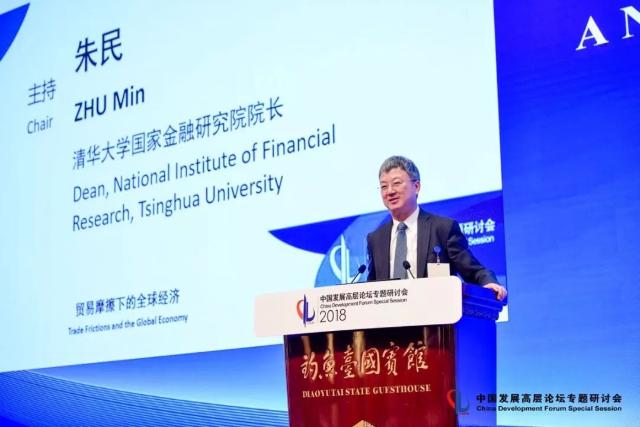
Looking forward to 2018: the global economy is welcoming "shifting speed"

  After a long recovery period since the international financial crisis in 2008, the global economy finally ushered in the largest range of growth acceleration in the past 10 years in 2017, which made people have more confidence when talking about the future of the global economy. With the coming of 2018, it has become a general consensus to be bullish on the global economy, and even some people think that the global economy is expected to enter a prosperous period in the new year.

  Of course, in 2018, the global economy ushered in a year of continuing to overcome difficulties. Can the strong growth of global economy resist the "headwind" of trade protectionism? What new variables will the global economies face when the United States chooses the policy shift of "national priority"? What benefits will China’s economy, as the main engine, bring to the world? In 2018, opportunities and challenges coexist for the global economy.

  The global economy has cut to a "fast growth block"

  Protectionism "challenges" open cooperation

  Compared with the caution and pessimism in the past few years, when looking forward to the global economic trend in 2018, many international institutions unanimously issued optimistic voices.

  In the latest World Economic Outlook Report, the International Monetary Fund raised its global economic growth forecast by 0.1 percentage point to 3.7%. The World Bank predicts that the global economic growth rate will rise from 2.7% in 2017 to 2.9% in 2018. The report "World Economic Situation and Prospects in 2018" released by the United Nations recently also believes that the global economy will continue to grow in 2018.

  "There are obvious signs of recovery in the global economy, and the basic cycle of economic growth has started. At present, the global economy is at the starting point of a new cycle. " Xu Hongcai, deputy chief economist of China International Economic Exchange Center, said in an interview with this reporter.

  Confidence is largely due to the bright transcripts of the global economy exceeding expectations in 2017. Nearly 10 years after the international financial crisis in 2008, the global economy has finally changed from "slow crisis" to "fast growth". However, also in 2017, some problems emerged and became increasingly serious, which made people optimistic about the overall performance of the global economy in the new year while not being too optimistic.

  A big worry is that in 2018, the global economy may not be able to avoid the head-on collision and contest between the two forces of open cooperation and protectionism.

  Perhaps the biggest bad news for the global economy in 2017 is the fundamental "turn around" of the world’s largest economy. Since Trump, the new president, came to power, taking "American priority" as the basic position, the United States has successively "retired" from several multilateral mechanisms such as the Trans-Pacific Partnership Agreement and the Paris Climate Agreement, and tried to dominate the North American Free Trade Agreement and modify the rules of the World Trade Organization. The process of liberalization and globalization has encountered a strong "headwind".

  "In 2018, protectionism will continue to be complicated. Facing emerging economies such as China ‘ Overtaking in corners ’ The western developed economies feel that the competitive pressure is obviously rising, and they may take frequent shots or even join hands. At the same time, the multilateral trading system of the World Trade Organization will be challenged. " Chen Fengying, a researcher at the Institute of World Economics of China Institute of Contemporary International Relations, said in an interview with this reporter.

  Xu Hongcai also believes that with the economic recovery of major developed economies in 2018, trade protectionism may be further strengthened.

  In this regard, the International Monetary Fund, the Bank for International Settlements and other organizations have warned that once the global protectionist sentiment is further intensified, it will make it more difficult to coordinate global policies, thus dragging down global productivity and economic growth.

  However, the advancement of some regional free trade negotiations has convinced people that open cooperation is still the irreversible mainstream of the global economy. In November 2017, the first leaders’ meeting of Regional Comprehensive Economic Partnership Agreement (RCEP) was held in the Philippines, and the Framework of RCEP Agreement was determined, which set a clearer direction for the negotiations officially launched in November 2012. Earlier, Japan and the European Union, two developed economies, also formally signed a free trade agreement.

  "In 2018, further deepening international cooperation will remain the overall trend." Xu Hongcai said.

  Chen Fengying also believes that although the international trade situation may face severe challenges and the risk of trade friction will increase in the new year, the actual international trade volume will not be greatly affected. "It can be seen that the overall trade volume of prosecution in the WTO is still very small."

  China’s "engine" is still stable

  "American priority" brings variables

  The World Economic Situation and Prospects in 2018 released by the United Nations shows that in 2017, one third of the global economic growth depends on China. As the main driving force of global economic growth, China’s economy has performed outstandingly in the past year, providing the world with full positive energy.

  In 2018, for the global economy, China’s economy will remain the "ballast stone" to inject confidence and the "main engine" to provide power.

  A few days ago, the World Bank, the International Monetary Fund, and the Organization for Economic Cooperation and Development raised their expectations for China’s economic growth in 2018. The latest research of many international organizations generally predicts that China’s economy will continue to maintain strong growth in 2018, and the continuous progress of economic stabilization and rebalancing will attract more overseas investors.

  Some analysts believe that in 2018, China’s economy, which has entered a new era, is expected to achieve qualitative change in three dimensions, namely, the cycle evolution presents new resilience, the reform and opening up advances to a new depth, and global governance creates new opportunities.

  "In 2018, China’s economy will operate within a reasonable range with little problem and full confidence. More attention will be paid to supply-side structural reform and quality improvement." Xu Hongcai believes that while maintaining steady growth, China’s economy will continue to exert its strength in the cultivation of kinetic energy and become a new bright spot. In addition, further deepening the reform and achieving remarkable results in the three major battles of preventing and resolving major risks, accurately getting rid of poverty and preventing and controlling pollution will also be an important point of view for China’s economy in 2018.

  According to Obst Field, chief economist of the International Monetary Fund, "the good news of China will be good news for the whole world".

  At the same time, as another important driving force of global economic growth, the United States may bring more variables to the world in the new year. In 2017, the US economy rebounded. In 2018, can this positive trend continue? The analysis believes that two factors will pose a challenge to the US economy, one is the uncertainty brought by the Trump administration’s economic policy, and the other is the potential policy risks that may be brought about by the gradual tightening of the Federal Reserve’s monetary policy.

  At the end of 2017, the US Senate passed the largest tax reduction bill in 30 years, and the Federal Reserve also started to raise interest rates for the third time in the year. "The US tax reform will attract global capital to return to the United States and stimulate the US economy, so the US economy in 2018 will not be too bad compared with this year." Chen Fengying said.

  Bank of America Merrill Lynch, the US investment bank, also predicted that the US economy will grow by 2.4% in 2018, higher than 2.2% in 2017. The tax reform plan will increase the US economic growth rate by 0.3 percentage points.

  However, for the global economy, risks will follow. Bank of America Merrill Lynch believes that with the implementation of the US tax reform bill, the potential impact on US economic growth has begun to stand out. In the first quarter of 2018, the pace of the Fed’s interest rate hike may be further accelerated, and the US dollar index will fluctuate greatly, which means that emerging markets will face more uncertainties.

  "There is no doubt that tax cuts and interest rate hikes in the United States will have an impact on global capital flows and industrial division of labor." Xu Hongcai said.

  Chen Fengying believes that the economic policy shift of the Trump administration will further complicate the world economic relations in 2018.

  At present, it seems that the only certainty that the United States will bring to the world in 2018 is that the Trump administration will make the United States more "self", and the global economy will face more uncertainty.

  Developed economies continue to pick up.

  Emerging economies accept challenges

  For most western developed economies, 2017 is a relatively easy year.

  In 2017, the recovery pattern of the United States "outshining others" turned to the growth of developed economies such as the United States, Europe and Britain. The euro zone has experienced the strongest expansion in the past 10 years, and European countries have gradually stepped out of the quagmire of the European debt crisis and ushered in long-lost common growth. Japan has gone further and further on the road of quantitative easing, and its economy has grown slightly. Reuters said that in 2017, the economic performance of the euro zone and Japan exceeded the forecast of the previous year.

  "In 2018, the western economies as a whole will have a steady growth." Chen Fengying said.

  HIS Markit, an international consulting firm, predicts that Europe will achieve an estimated economic growth of 2.2% in 2018. Thanks to export, domestic demand and infrastructure investment for the 2020 Tokyo Olympic Games, Japan’s economic growth rate in the new year will reach 1.2%.

  While the developed economies continue to pick up, the economies of emerging economies will usher in a more challenging year.

  Some analysts believe that in 2018, emerging economies may face three challenges. First, under the background of the emergence of anti-globalization wave and the more complicated international trade environment, the trade and investment environment in emerging markets is more severe, which has a negative constraint effect on their economic growth; Second, emerging market countries themselves may face the risk of the spread of populism and extremism, and their political stability will be affected; Third, geopolitical risks remain high.

  Statistics also show that there will be nearly 20 elections in emerging market countries in 2018, including large emerging market countries such as South Africa and Indonesia. JPMorgan Chase analysts also pointed out that in 2018, Latin America will usher in the most intensive calendar of political events in more than 10 years. Political factors may become an inestimable risk in investment in emerging markets.

  However, all parties are still generally optimistic about the vitality of emerging economies. The International Monetary Fund predicts that the economic growth rate of emerging economies and developing countries will further rise to 4.9% in 2018, reaching a five-year peak. Among them, the contribution of emerging economies to global economic growth is expected to reach 77%, up 2 percentage points from 2017.

  Hong Kong’s "South China Morning Post" published an article saying that investors in emerging markets will continue to be shaken in 2018, but they will not be disturbed. The rising trend of developing economies still exists and will continue to perform well.

  "With the recovery of commodity prices such as oil and natural gas, emerging economies such as Russia and Brazil have benefited a lot. In addition, ‘ Belt and Road ’ Construction will also provide more space for cooperation between emerging economies and developed economies. " Xu Hongcai said.

  Chen Fengying also believes that, on the whole, emerging economies are still the main contributors to the global economy. "In 2018, this pattern will not change much."

The State Key Laboratory of Supramolecular Structure and Materials of Jilin University held the Supramolecular Chemistry and Materials Forum.

Zhang Xi pointed out that as one of the main constructors of polymer science in Jilin University, Academician Shen Jiacong has been active in the forefront of science, and has carried out supramolecular research earlier in China, and combined supramolecular with polymers, organic optoelectronics and biomaterials, constantly enriching the connotation of polymer science and expanding the extension of supramolecular science. Under his leadership and guidance, the State Key Laboratory of Supramolecular Structures and Materials was established on the basis of the former open laboratory of molecular spectroscopy and molecular structure of the State Education Commission, and talents were gathered and the direction was adjusted, which trained a batch of outstanding scientific research talents for the country. It is hoped that the teachers and students of the laboratory will continue to carry forward the scientist spirit of their predecessors who are rigorous in studying and serving the country, face the forefront of world science, meet the development needs of the country, actively optimize the layout, and boldly explore and innovate.

At the meeting, Academician Shen Jiacong gave an academic report entitled "Research Progress of Supramolecular Chemistry in Jilin University". In more than an hour’s report, he began with the initial layered assembly film, and told everyone in detail the course of becoming attached to supramolecular chemistry and the research experience of expanding supramolecular chemistry to the fields of organic luminescence and biomedicine, and outlined the scientific research track from tracking to leading the forefront of science and technology for decades. Although he is very old, he has clear thinking and profound thoughts, and tells profound scientific principles in simple and easy-to-understand language like a story, which makes the students present memorable and benefit a lot.

Zhang Hongyu, Dong Zeyuan and Wu Guanglu, representatives of outstanding young scholars in the laboratory, gave academic reports entitled "Flexible organic supramolecular luminescent single crystal", "bionic ion channel" and "quantitative preparation strategy of multi-component functional assembly" respectively, and introduced a series of breakthrough research achievements made by their teams in the fields of supramolecular luminescent materials and devices, biological supramolecules and flexible solar cells in recent years.

The two associations issued a document requesting the crew to establish a professional ethics evaluation system for cast members.

  According to the website of China Internet Audio-visual Program Service Association, the China Federation of Radio and Television Social Organizations and China Internet Audio-visual Program Service Association released the "Production and Operation Specification for TV Network Drama Film Group (Trial)" on 26th. It is pointed out that the crew should establish a professional ethics evaluation system for cast members, and if there is conclusive evidence for the behavior of cast members who violate professional ethics, they should report it to their respective industry associations or relevant departments. Production institutions should consciously resist the unhealthy trend of unreasonable high pay and limit the proportion of actors’ pay to a reasonable production cost, and the total pay of all actors should not exceed 40% of the total production cost, of which the main actor’s pay should not exceed 70% and other actors’ pay should not be less than 30%.

  The full text is as follows:

  Production and operation standard of TV drama network film crew (for Trial Implementation)

  In order to further promote the normalization and standardization of the industry, strengthen the production supervision and standardized management of TV dramas and online dramas, ensure the life and property safety of film crew members, reasonably and effectively control production costs, resist unhealthy practices in the industry, put an end to violations of laws and regulations, and promote the high-quality development of TV dramas and online dramas. According to the Civil Code of People’s Republic of China (PRC), the Labor Law of People’s Republic of China (PRC), the Law of People’s Republic of China (PRC) on Safety in Production, the Regulations on the Management of TV Drama Content, the Constitution of the China Federation of Radio and Television Social Organizations and the Constitution of the China Internet Audio-visual Program Service Association, and in combination with the characteristics of the industry, the production and operation specifications for TV drama network film crews (for Trial Implementation) (hereinafter referred to as this specification) are formulated.

  Chapter I General Provisions

  Article 1 The establishment of a TV network drama film crew (hereinafter referred to as the drama crew) shall meet the requirements that the drama has been filmed and produced by the competent government department for the record and publicity, and there is sufficient shooting fund guarantee and good market expectation. Producers and contractors should adhere to the correct political direction, value orientation and aesthetic orientation, spread advanced culture with a high sense of social responsibility, adhere to artistic standards and quality norms, and strive to create excellent works with profound thoughts, exquisite art and excellent production.

  Article 2 The crew must abide by the relevant laws and regulations on the production and production of TV dramas and online dramas, ensure the safe and efficient operation of the filming work, and assume the responsibility for safe production of the filming work according to law.

  Article 3 The crew must strictly comply with the requirements of the State Administration of Radio, Film and Television, and further strengthen the management of the costumes on the basis of ensuring the correct orientation of the themes and ideas of the plays, especially strengthening the detail control, being serious and meticulous, putting the responsibilities on specific departments and personnel, effectively preventing the improper use of costumes and other specific pictures and sounds from the source, and making every effort to ensure that the details of all aspects meet the requirements and are not problematic.

  Article 4 The crew must strictly implement the Notice of the State Administration of Radio and Television on Further Strengthening the Management of the Creation and Production of TV dramas on the Internet (No.10 [2020] of the State Administration of Radio and Television) and the Notice Requirements of the State Administration of Radio and Television on Further Strengthening the Management of Radio, Television and Online Audiovisual Programs (No.60 [2018] of the State Administration of Radio and Television), strictly implement the Opinions on the Allocation Ratio of the Production Cost of TV dramas on the Internet, and resolutely resist unreasonable high pay; Strictly regulate the management of TV drama pay contract, and strictly prohibit "yin-yang contract", "sky-high pay", tax evasion and other illegal acts; No vicious competition, no actor as the sole bargaining standard, and resolutely curb the bad behavior of asking for and driving up high pay.

  Article 5 crew members must abide by national laws, regulations and policies, practice socialist core values, carry forward the spirit of patriotism, and resist all acts that undermine national honor, religious beliefs and national unity, as well as all kinds of cult organizations and illegal activities and acts that endanger social stability and unity; Abide by social morality, public order and good customs, and put an end to pornography, gambling, drugs and other illegal acts; Abide by the convention on professional ethics and industry self-discipline; Perform legal obligations such as paying taxes according to law. If there is any violation, depending on the seriousness of the circumstances and consequences, corresponding penalties can be imposed according to the provisions of national laws and regulations and the relevant provisions of the crew contract, and the losses caused to the crew can be compensated.

  Article 6 This Code is applicable to the management of the crew in the preparation period, shooting period, post-production and publicity and distribution process.

  Chapter II Requirements for Responsibilities

  Article 7 Requirements for Producers’ Responsibilities

  1. The crew implements the producer-centered system. Producer is the chief person in charge of the TV network drama project and the core organizer and manager of the drama group. Entrusted by the producer (or contractor), producer is responsible for effectively managing the whole process of production and operation of TV network drama, completing all-round organization and management from script planning, fund-raising, team formation, shooting and production to publicity and distribution, successfully completing the shooting task and bringing TV network drama to the market, and maximizing social and economic benefits on the premise of giving priority to social benefits.

  2. Producers shall strictly check and reasonably select writers, directors, leading actors, photographers, artists and other crew members and personnel of various departments according to the Post Setting of Major Departments and Personnel of TV Network Drama Film Team (see Annex 1 for details). The crew must formulate a contract for the employment of cast members, which should clearly stipulate the specific duties, rights and obligations of the cast members, and be checked by professional lawyers. Finally, the producer authorized by the production unit (or contractor) will sign with all kinds of cast members.

  3. Producers should explore new technologies for the production of TV dramas and online dramas, and use advanced production management methods to scientifically manage the project in terms of planning, production, cost, quality, process, team and risk, so as to promote the safe, efficient, economical and environmentally friendly production of the crew.

  4. Producers should strengthen political literacy, improve artistic accomplishment, enhance aesthetic ability, have quality requirements such as planning ability, decision-making ability, management ability, public relations ability and management ability, and constantly improve management innovation ability.

  5. Producers must have good professional ethics, be honest and trustworthy, have standardized management, be fair and impartial, love their jobs and be dedicated to their work, resist the bad atmosphere in the industry and refuse to violate the law and discipline.

  Chapter III Work Process Management

  Article 8 All creative workers and staff of all departments should actively understand the ideological and artistic requirements of the works, familiarize themselves with the scripts, analyze and plan their respective work and responsibilities, do a good job in desk work, and actively engage in creation and innovation.

  Article 9 The work of the production department should run through the production of TV dramas and online dramas, listen carefully to the suggestions and demands fed back by various departments, coordinate the production arrangements of various departments and make detailed shooting plans. The implementation of the plan should be effective and timely, and important plans should be implemented to every staff member in each department. All departments must make good preparations according to the shooting plan and act in unison. The shooting plan shall not be changed without approval. In case of special circumstances, it is necessary to change the plan, which should be approved by the production department.

  Article 10 Producers shall timely inspect and supervise the progress and quality of the execution of the shooting plan, monitor the specific implementation of the management cost and shooting budget, and make timely adjustments to the parts that are not suitable for execution and unpredictable in practice.

  Article 11 During the filming process, cast members should communicate and negotiate with the director and producer in advance if they do have reasonable creative suggestions, put an end to putting forward opinions that affect the filming plan on the spot, and resolutely oppose the bad behavior of on-the-spot strike.

  Chapter IV Safety and Security

  Article 12 Insurance system

  1. The crew has the responsibility to ensure the life safety of the cast members and purchase compulsory insurance (personal accident insurance and personal accident medical insurance) for all the cast members, especially the cast members of high-risk special jobs. At the same time, cast members who apply for high-risk special jobs should issue physical health certificates and relevant professional qualification certificates. The treatment of accidental work-related injuries should be strictly implemented in accordance with the relevant provisions of the state. Once an accident occurs, the crew should coordinate the insurance company to make claims in time while actively treating it.

  2. In order to ensure the safety and reduce the uncontrollable risks of the crew, the crew should give priority to the shooting scene (including the studio) with the site insurance, so as to ensure the safety of the crew in the shooting site and the compensation for the damage of the site itself.

  3. The crew can purchase corresponding property accident insurance for the important equipment, clothing and props of the group according to the needs.

  4. The crew vehicles must be insured by the vehicle owner on time and not less than 500,000 third party accident insurance, and the crew shall not use vehicles without insurance.

  Article 13 Safety in production

  1. The crew must abide by the relevant laws and regulations of the state, employ professionals who are recognized by the national public security, fire control and safety production management departments and have qualification certificates, and use fireworks, guns, ammunition, chemical materials and other items safely. Strict safety custody, safe use and safety inspection systems should be formulated, and full-time responsibility should be taken in the safety management and use process of fire prevention, theft prevention and explosion prevention, which should be implemented to each specific responsible person, and each item must be signed and accepted when it is used and handed over.

  2. The equipment and equipment used by the crew for early and late production must be managed by special personnel from all departments, and the system that the responsible person is responsible for the damage, loss and theft of the equipment and equipment must be strictly implemented.

  3. The crew should formulate a strict safety management system to respect and protect the life safety and personal property safety of the cast members. If there is any theft, damage or injury, it should be verified and solved in time, and if necessary, it can call the police or file a lawsuit.

  4. Strictly manage and scientifically dispatch vehicles to prevent fatigue driving, drinking driving and illegal driving; Construction departments such as art scene setting and unconventional operation departments such as on-site lighting field affairs must take safety protection measures to ensure that there are no hidden dangers; Special departments such as martial arts stunts, vehicle equestrian, firearms and fireworks, underwater and aerial photography must focus on prevention, formulate safety shooting plans, and complete the work by professionals.

  5. When the shooting scene is in a non-smoking environment such as public places, cultural relics protection units and forest areas, all crew members should implement the non-smoking regulations.

  6. We should strengthen the protection of the animals participating in the shooting, set the corresponding animal shooting time and safety protection measures according to the shooting situation, use the animals provided by professional animal training companies and personnel to shoot as much as possible, and do not harm or abuse animals.

  Article 14 Emergencies

  1. The crew should formulate emergency plans according to different situations in their work. If they encounter various emergencies or accidents, they must attach great importance to them, take them seriously, properly handle them, and call the police in time or seek help from the local government and relevant departments when necessary.

  2. When the crew encounters unforeseen and force majeure factors (including epidemic situation, natural disasters, policy norms, government control, etc.) that cause economic losses, they should obey the management of the local government, report to investors, insurance companies and other relevant departments in time, seek solutions, do emergency treatment and aftermath, and minimize economic losses as much as possible.

  Article 15 Employment management

  1. The crew has the right to dismiss in advance according to the contract, and the remuneration can be paid as appropriate according to the time and workload of joining the group, and the economic losses caused to the crew should be compensated accordingly.

  2. Temporary extras and temporary staff should be carefully selected, and the crew must sign a labor contract with the organizer (labor dispatch company) or himself when hiring, and require to issue identity certificates and health certificates, subject to unified management.

  3. The crew shall strictly implement the relevant laws and regulations of the state and shall not employ minors at will. If it is really necessary to choose a minor to play the role according to the content of the plot, a contract should be signed with the guardian or legal representative of the minor. Attention should be paid to protect their personal safety and mental health when shooting, and the working hours should be arranged reasonably according to the age of minors, and the time for cultural study and rest should be guaranteed.

  4. The crew shall set standards, arrange accommodation and travel for cast members according to their professional level and actual needs, and stipulate them in the contract to prevent specialization and comparison.

  5. The crew must, in accordance with the relevant labor security management requirements, reasonably arrange work and rest time, ensure the rest of the cast members, ensure work efficiency and complete the shooting plan.

  6. During the working period of the cast, the cast members shall, in principle, not concurrently hold the jobs of other cast members. In case of important matters such as overseas visits, national performance tasks and participation in awards, you must report in advance and get permission from the producer before you leave the group.

  7. The crew should establish an evaluation system for the professional ethics of cast members. If there is conclusive evidence for the behavior of cast members in violation of professional ethics, they should report it to their respective industry associations or relevant departments.

  Article 16 Health guarantee

  1. The crew should be concerned about the health of the cast members and establish a sound health management and epidemic prevention mechanism. If infectious diseases or unexplained diseases are found, the patient should be isolated at the first time and reported to the local hospital and health and epidemic prevention department, and strict prevention and control measures should be taken to prevent the spread of infectious diseases.

  2. The crew should effectively ensure the food hygiene and environmental hygiene and safety, and the life producer should arrange the catering reasonably according to the food standard to ensure the nutrition and hygiene of the cast members.

  Chapter V Remuneration for Labor Services

  Article 17 The labor remuneration and its standards for cast members shall be formulated by the production unit (production organization), and relevant personnel shall abide by the contract.

  Article 18 The crew shall pay the labor remuneration of the cast members in full and on time as agreed in the contract, and there shall be no breach of contract such as deduction or unreasonable delay in payment.

  Article 19 Production organizations should consciously resist unreasonable high pay and other unhealthy practices in the industry, strictly implement the relevant provisions of the state, and the Opinions on the Allocation Ratio of TV Network Drama Production Cost jointly issued by the TV Production Committee and Actors Committee of China Federation of Radio and Television Social Organizations, China Network Audiovisual Program Service Association and China TV Drama Production Industry Association, and limit the actor’s pay ratio to a reasonable production cost range. The total remuneration of all actors shall not exceed 40% of the total production cost, of which the main actor’s remuneration shall not exceed 70% and other actors’ remuneration shall not be less than 30%.

  Chapter VI Production Management

  Twentieth shooting production management

  1. The crew should strictly abide by the relevant laws and regulations of the state on the protection of the environment and cultural relics, consciously protect the environment and cultural relics, resolutely stop the barbaric shooting behaviors such as destroying the natural environment and national cultural relics, and make filming civilized.

  2. The crew should obtain the permission or support of the relevant departments of the local government when shooting on location. The organization of the crowd on the shooting site should prepare in advance and issue notices to discourage the masses from paying attention to the ways and means. They must not be rude and do not conflict with the masses.

  3. The crew should obtain the approval of the relevant administrative departments in the process of shooting the surrounding environment (especially aerial photography) involving military and confidential facilities, and strictly keep state secrets.

  4. Strictly abide by the national ethnic and religious policies and respect folk customs, folk customs and religious culture.

  5. The crew should practise thrift, oppose extravagance and waste, and reasonably control the production cost.

  6. The crew should make a rigorous and meticulous shooting and production plan, and all departments should complete the pre-preparation, shooting and post-production tasks with high quality and effectiveness according to the work plan and process, combined with the cost budget and production cycle.

  7. In order to ensure the production order, shooting plan and production quality, the crew should formulate a clear division of responsibilities and a department head responsibility system. All losses caused by work mistakes and delays due to violation of crew regulations should be investigated for the economic compensation responsibilities of their subordinate departments and specific responsible persons according to the law or according to the prior agreement. If heavy losses are caused, they should also be investigated for their legal responsibilities.

  Article 21 Financial management

  1. The crew must strictly implement the national tax policy, all cast members should consciously pay taxes according to law, and the withholding agent should fulfill the legal obligations such as withholding and remitting according to law.

  2. The accounting personnel employed by the crew must obtain the qualification certificate of the national industry assessment, and should strictly implement all kinds of contracts involving financial content signed by the crew, abide by the contracts and act according to regulations.

  3. The crew should formulate an objective, reasonable and qualified shooting cost budget according to the important factors of the project, such as the subject matter, production scale, collection volume, cast, shooting cycle, shooting location, etc., and manage and control the crew’s finance, contract, budget and funds strictly and effectively according to the law, so as to ensure the smooth completion of the shooting and production of TV dramas and online dramas.

  4. Before starting up, the crew should make all preparations for the fund guarantee plan and financial expenditure, rationally allocate and use funds, supervise and audit the budget of each department, and make good cash reserves to deal with accidents.

  5. The signing of all contracts and all payment, loan and reimbursement procedures of the crew shall be carried out in accordance with the Financial Management System and Implementation Process of TV Network Drama Film Group (see Annex 2 for details) on the premise of complying with national laws and regulations, so as to ensure fairness, openness and justice, and to eliminate irregularities.

  6. The placement advertisements of TV dramas and online dramas shall comply with the relevant laws and regulations of the state and meet the needs of the plot, and the crew shall clearly stipulate them in the relevant contracts.

  7. Before the crew is dissolved, it should actively cooperate with the relevant government departments to complete the settlement and disposal of creative subsidies, support funds and other funds, otherwise the company applying for the relevant funds should bear corresponding responsibilities.

  Twenty-second procurement lease management

  1. The crew must establish a perfect and meticulous property management system, and the financial personnel shall pay the money and collect the invoice when purchasing the production materials, consumables and daily necessities. All purchased equipment, equipment, articles, tools, office supplies, consumables and leased equipment must be managed at different levels by a special person, and the acceptance shall be recorded and a detailed list shall be made. For non-consumable assets, the financial personnel should register the relevant assets and mark the user department and the handler, so as to facilitate the relevant person in charge to count and recover. In the process of shooting, the production department should regularly check the use and storage of items.

  2. All items purchased by the crew belong to the producer or producer, and no individual may occupy, lend, embezzle or sell them at will. If the above acts cause economic losses to the producer or producer, the responsible person shall bear legal responsibilities such as corresponding compensation.

  Twenty-third transportation management

  1. The transportation tools used by the crew should be dispatched and managed by special personnel, including but not limited to vehicle entry and exit procedures, vehicle deployment, refueling management, reimbursement management, etc. No one has the right to use the crew’s vehicles without authorization.

  2. Drivers should abide by traffic laws and regulations, drive safely, prevent fatigue driving, prohibit drunk driving, and not lend others to drive, otherwise the lender will be responsible for traffic accidents; Drivers should take good care of their vehicles and ensure that the means of transport are in good working condition.

  3. Vehicle management personnel should strictly control the consumption of oil materials, prevent illegal and criminal acts of embezzling and stealing oil materials, and immediately send them to the public security department for investigation once found.

  Article 24 Quality management

  1. In order to ensure the artistic quality of works, in the process of production management, producers, directors and creative teams should strictly follow the requirements of the State Administration of Radio, Film and Television and relevant administrative departments, strictly control the quality, and strive to create excellent works with "profound thoughts, exquisite art and excellent production" with the goal of "truth, goodness and beauty". Excellent quality management should run through all aspects of TV production.

  2. All departments should pursue refined production, and strengthen the details in performances, scenes, costumes, makeup, props, music, etc. to ensure that there are no illegal contents; Producers and directors should strictly supervise the production work at all stages, implement the production of the "Description Table of Specific Pictures and Music Usage" of the General Administration, control the quality of the final works, and ensure that the works achieve their due ideological height, artistic quality and technical standards.

  Article 25 Work discipline and team management

  1. All cast members must strictly abide by the rules and regulations of the cast, consciously fulfill the responsibilities and obligations in the signed cast employment contract, and actively complete their own work.

  2. The crew is strictly prohibited from drinking, fighting, bullying and other bad behaviors; Put an end to all passive slacking. If there is a strike that affects the filming progress, the organizers and participants of the trouble should compensate for the economic losses until they are removed from the crew.

  3. The crew is a unified whole, and the cast members should respect each other and treat each other as equals; For the sake of safety and convenience for work, the crew should concentrate on accommodation and dining according to the normal budget standards, and they are not allowed to stay out or stay in groups without approval; The crew should oppose the unhealthy trend of extravagance and vanity, showing off wealth by comparing with others, and not provide living conditions such as accommodation and lodging that exceed the normal standards.

  4. The improper words and deeds of the cast members will have a negative impact on the TV dramas and online dramas they participate in. The cast members should exercise self-discipline according to the provisions of the contract. If the works suffer specific losses due to their improper words and deeds (including but not limited to stopping broadcasting, withdrawing files, canceling the film purchase contract, etc.), the producer (production organization) has the right to investigate their responsibilities and claim compensation.

  5. It is the responsibility and obligation of all members of the crew to protect the copyright of the works. Without the permission of the crew, no one may disclose the plot (including the character modeling) and the shooting situation to the outside world and the media.

  Chapter VII Administration of Copyright and Signature

  Twenty-sixth regulate the management of TV drama network drama signature, according to the following specifications:

  (1) Sign in accordance with laws and regulations

  According to the provisions of People’s Republic of China (PRC) Civil Code, People’s Republic of China (PRC) Copyright Law and other laws and regulations, we should sign according to laws and regulations, and build a good order of works signing.

  (2) Honesty and credit signature

  The signature of the work should truthfully reflect the ownership of the work.

  (3) Clear and orderly signature

  The signature at the beginning and end of the film shall be signed according to the order agreed in the contract. Foreign actors or staff shall be marked with nationality, and actors or staff from Hong Kong, Macao and Taiwan shall be marked with corresponding areas to form clear and orderly signature rules.

  (4) specification expression signature

  Protect the legitimate rights and interests of copyright owners, promote the copyright transaction of works, and avoid such situations as misnaming, using abbreviations and logos, and different signatures of different carriers. Signature strictly uses the standard subject name and Chinese character expression.

  (5) Copyright statement

  At the end of the film, the copyright mark "Statement of Rights/Year of * * * * The complete copyright of this work belongs to * * *" was added to publicize the copyright ownership of the work.

  (6) exclusive rights statement

  The subject enjoying one or more exclusive copyright property rights shall be indicated in the copyright statement.

  Article 27 consistency of signature

  When the production organization delivers to the broadcasting organization or distribution organization, the signature shall be consistent with the version examined and approved by the administrative department of radio and television.

  Article 28 Signature of cast members

  For those who are not signed by the right holders of TV dramas and online dramas, they should not be signed at the "production unit" or "production unit", so as to prevent the occurrence of false names, substituted signatures and missing signatures.

  The way, order and location of the cast members’ signatures in TV dramas and online dramas are stipulated in the employment contract. Producers should communicate and agree on the signature issue when signing the employment contract with the cast members to avoid the occurrence of signature disputes such as ranking competition.

  Auxiliary staff who are not directly involved in artistic creation do not sign at the end of the film.

  Chapter VIII Supplementary Provisions

  Article 29 The technical standards for the supply of finished TV dramas (that is, the requirements for the duration, signature, image, sound, subtitles, packaging format, storage media and quality of TV dramas) shall be implemented in accordance with the Specification for Mastering TV Plays promulgated by the State Administration of Radio, Film and Television. Technical standards such as video format and parameters of online dramas shall be implemented in accordance with the Specification for Naming and Parameters of Video Format of Online Audiovisual Programs promulgated by the State Administration of Radio, Film and Television.

  Thirtieth in order to strengthen the management of TV network drama shooting, to ensure that the production work is carried out in a professional, efficient, economical and orderly manner, combined with the characteristics of the industry, the post setting of main departments and personnel of TV network drama shooting team (reference) is formulated. See Annex 1 for details.

  The producer shall set up a film crew to shoot and produce according to this standard, and the types of work involving national security technology and other requirements shall be certified according to relevant regulations.

  Article 31 In order to strengthen the financial management of the TV network drama crew, standardize the financial reimbursement process of the crew, implement cashless management of the crew and uniformly implement the online payment regulations, reasonably and effectively control all expenses, save costs, oppose waste, and put an end to unhealthy practices and violations of law and discipline, the Financial Management System and Implementation Process of the TV network drama crew is formulated according to the actual situation of the industry. See Annex 2 for details.

  Article 32 The China Federation of Radio and Television Social Organizations and China Network Audiovisual Program Service Association jointly formulate this Code, and the Television Production Committee of the China Federation of Radio and Television Social Organizations is the executing agency.

  Article 33 This Code shall come into force as of the date of promulgation.

"Maintenance-oriented Reformer": the Judicial Officer of Modern China in the Great Change.

During the Second World War, on January 11th, 1943, China, Britain and the United States signed the Treaty on Abolishing Britain’s Extraterritorial Jurisdiction in China and its Related Privileges, and the Treaty on Abolishing America’s Extraterritorial Jurisdiction in China and Dealing with Related Issues, which officially announced that Britain and the United States abolished their extraterritorial jurisdiction and other privileges in China. Soon, Belgium, Norway, Brazil, the Netherlands, Sweden and other countries successively cancelled their relevant privileges in China. As a result, China’s judicial sovereignty was recovered. After January 11th, it became the "Judicial Festival" of the Republic of China, both to commemorate and to promote the spirit of the rule of law.

Twenty-four years later, on January 11th, 1967, Xie Guansheng, a witness of China’s modern legal reform, a celebrity in the legal field and then the president of Taiwan Province’s "Judicial Court", said at the commemoration of the Judicial Festival in Taipei: "Sixty years ago, China began to reform the original legal and judicial system, and the motive at that time was to abolish the consular jurisdiction of outsiders … So all the reform measures at that time had to give up others as much as possible in order to meet the hopes of outsiders. China legal system, originally promoted as one of the five legal systems in the world, has its inherent advantages, so it has to give up completely. At that time, because he was single-minded and focused on recovering legal rights, he had his own difficulties and could not be criticized. However, today’s review seems to have been overkill. " Xie’s words, such as "giving up oneself and following others", "completely giving up one’s love", "having no choice but to make difficulties" and "overcorrecting", are quite heavy, which shows the profound introspection of a generation of legal professionals on the process of modern legal system reform in China. However, since the historical process of returning from heaviness to heaviness and returning from introspection to introspection has started, it is irreversible.

Ordinary people in Beijing during the Qing Dynasty

Since the beginning of modern times, with the western countries’ strong ships and strong guns, colonial conquest and trade exchanges, exchanges and interactions around the world have become increasingly frequent, and China is no exception. Since the late Qing Dynasty, the arrival of the "West" has gradually brought China into the world system. China’s modern legal system and judicial system are transplanted from the west, and the judicial officer must have some attributes of its origin; At the same time, China’s modern magistrates were born in China after all, and could not help but be influenced by China’s tradition and the reality at that time. In short, the modern legal professionals in China, including judicial officers, are the product of the interweaving and interaction of Chinese and Western factors, ancient and modern factors, old and new factors and so on.

As we all know, the world legal system since modern times can be roughly divided into Anglo-American legal system and European legal system. There are great differences between the judicial officers in the two legal system countries in terms of historical tradition, system design and reality. Since the late Qing Dynasty, China’s legal system reform has been far from Europe and close to France and Japan. Accurately speaking, China transplanted the European legal system through Japan.

If we take Japan, which transplanted the continental law system, as a reference, it is not difficult to find the similarities between Japanese (before World War II) judges and modern China judges. In Japan before World War II, although judicial officers enjoyed a high reputation in terms of knowledge and personality, they "actually belonged to the bureaucratic group" and lawyers were unreasonably placed under the supervision of prosecutors. Although among the legal professionals at that time, there were indeed many of them who were full of backbone, defended themselves and resolutely resisted improper interference, their efforts were often weak because of the lack of institutional guarantee, and they even had to pay a heavy price for it sometimes. Generally speaking, in Japan before World War II, the construction of the judicial system "took improving authority as the basic theme". This is consistent with Japan’s overall goal of strengthening the state bureaucracy and building a modern nation-state before World War II.

Since the modern judicial officer system in China was transplanted from the European legal system, many attributes of judicial officers in the European legal system were naturally inherited by China. In modern China, although the voice of "judicial independence" is very high, the judiciary is only a part of the political power and one of the many "yamen" in the country, whether in the establishment of the national system or in the actual operation process; Judicial officers serving in judicial institutions are actually no different from civil servants (civil servants) in other institutions except for their professional division of labor. This is basically the same as the situation of judicial officers in European legal system countries. Modern legal professionals in China mainly include judicial officers, lawyers and legal researchers. In fact, they do not constitute an interrelated legal community. Cai Shuheng, a jurist, believes that China’s "legislators, scholars, judges and lawyers are each part of the whole law" and their relationship should be "extremely close", but this is not the case at present. "Even if they don’t deny each other, at least it is not easy to find their proper relationship. Generally speaking, the attitude of scholars ignores the relationship between laws and regulations and society in principle, and they are either followers of French and precedent supremacy, that is, they are trapped in the desperate situation of self-first; When legislators make laws and regulations, the temptation of legislation seems to be greater than the stimulation of reality; The function of a judicial officer is nothing more than an institution that applies syllogism. The reconciliation between ideal and reality, the relationship between laws and regulations and life, and the balance between justice and utility are all irrelevant. As for lawyers, professional consciousness is the guiding principle of all actions, and the justice and interests of the society and the country are within the scope of not affecting personal interests.There is room for its existence. Therefore, the understanding and practice of law and law with China society as its content are inevitably different from each other. The law is the law, losing its inherent meaning and even losing its existence. " Obviously, there is a lack of real connection between various parts of the legal professional groups in China. From the source of legal system transplantation, the various components of legal professional groups in European legal system countries are also generally the same, which is "a combination of fragmented individuals"

In addition to inheriting many attributes of the European legal system, the situation in China in the late Qing Dynasty and the Republic of China also profoundly influenced the individual and group of judicial officers. In modern China, "change" has become the most prominent dynamic feature. "Change" is first manifested in the change of political system. In the reform of the New Deal in the late Qing Dynasty, especially in the late New Deal, the imitative constitutional reform was introduced, and the establishment of political system and related system were transplanted to the west as a whole, so the political system reform was unprecedented. It was in this historical context that the reform of laws and the establishment of new-type judicial institutions were initiated in the late Qing Dynasty, and the first batch of "new-type" judicial officers in modern China came into being. Based on the historical facts, it is not difficult to find that the first batch of new-type judicial officers came from two sources: criminal officers in the traditional era and new-type (study abroad) legal and political personnel.

Taking Tang Xuan, a criminal officer before and after the official system reform in the late Qing Dynasty, as a case, we can generally show how a traditional criminal officer turned into a modern judicial officer (judge) and his observations and feelings in the process. As a criminal officer, Tang Xuan personally experienced the process of setting up the Dali Court and the Ministry of Justice and the dispute between the Ministry and the Court. In this process, Tang himself also completed the transformation from a criminal officer to a judge. In the face of the judicial reform accompanied by the reform of the official system, Tang Xuan had little psychology and actions to take the initiative to deal with this change except consciously knowing some new knowledge of law and politics. After the reform of the official system, Tang Xuan, as a new judge, still belongs to the category of traditional criminal officials on the whole. His knowledge subject is still traditional jurisprudence, and judicial reasoning and trial methods have not changed much. It can be said that his body is new but his heart remains the same. This reflects the "old" path of the first batch of "new" judicial officers in modern China.

The first batch of modern judicial officers in China also had many new legal and administrative personnel, and "newcomers" and "new knowledge" were thus injected into the modern legal reform in China. Taking Huang Zunsan, a law student studying in Japan in the late Qing Dynasty as a case, the author focuses on his reading structure, old and new knowledge and daily life during his study abroad. The research shows that Huang’s reading includes three parts: foreign language, law major and daily reading, in which foreign language occupies a considerable part of time and energy. Even in daily reading, he often improves his foreign language level by reading foreign language newspapers and books. In addition, there are various club activities and making friends, which naturally squeezes the study time of law major. Huang’s preference for ancient books and self-cultivation books in his daily reading reflects how "new" the "newcomers" who have been trained in the new era and new environment are, and the old resources and factors may be beyond his previous imagination. Huang’s study of law was decided in the second half of the year, and it was a helpless choice, but it did provide a lot of new ideas and new horizons. His interest was in the public law fields such as constitution, administrative law and international law, which reflected the problems faced by students studying in Japan and their countermeasures.

On the basis of investigating individuals, this book also pays attention to the formation of judicial officers in the late Qing Dynasty. With the New Deal moving towards constitutionalism in the late Qing Dynasty, the separation of powers and judicial independence became one of the ideal prospects and practical directions of the New Deal reform. In the thirty-second year of Guangxu, the Qing government set up a new type of supreme judicial institution-Dali Court, from which a new type of judicial officers in China emerged. During the Xuantong period, the selection of judicial officers gradually embarked on the road of standardized examination and selection. After Xuantong’s two-year judicial examination, a large number of legal and political personnel joined the ranks of judicial officers. In Xuantong’s two or three years, a group of more than 1,000 judicial officers was formed, of which "newcomers" accounted for nearly half. The difference between the old and the new did exist in the group of judicial officers in the late Qing Dynasty, but in fact it was more about "new people are not new" and "old people are not old". Due to the system changes such as the New Deal and constitutionalism in the late Qing Dynasty, many traditional personnel have realized modern transformation, from "old people" to "new people", and most modern new judicial officers have been transformed from traditional criminal officers, candidates and other officials. Many judicial officers, who were originally responsible for resolving social disputes and maintaining the existing order, failed to do their jobs with peace of mind, and many became revolutionaries. From this point of view, the group of judicial officers in the late Qing Dynasty was rather "different in appearance and spirit" and only had its "shape". In the process of the formation of this group, it reflects how people inherit and transform in the process of China’s transformation from tradition to modernity, and how change and invariance coexist.

The "change" of modern China is also reflected in regime change. In the third year of Xuantong, the Revolution of 1911 broke out. In the revolutionary wave, the Republic of China was founded, the Qing emperor abdicated, and China entered OneRepublic. At the time of Dingge, the experience and feelings of Shen Jiaben, the key figure in China’s legal reform and the leader of the legal circles in the late Qing Dynasty, in the first year of the Republic of China were quite special. It contains a lot of information about the interaction between historical figures and the turning times, such as the frequent changes in the judicial center of the Qing court after the outbreak of the Revolution of 1911, many contradictions and conflicts in the handover of old and new regimes, the complicated face between the old and the new, and so on. As the leader of the legal circles in the former Qing Dynasty and the witness of regime change, Shen Jiaben felt not only the changes and disturbances of the current situation, but also the silence of a dying old man who "stopped dealing with politics" between the front and the back of the historical stage and the center and the edge, and cared about politics without participating, which provided a soothing and deep background for the historical changes at the time of Dingge Reform.

After the Revolution of 1911, China realized the regime change from the Qing Dynasty to the Republic of China. It is generally believed that the "revolution" is more of a compromise, so the continuity between the two regimes is obvious, especially the personnel system. Actually, not really. In areas that emphasize professionalism, such as the judiciary, under the face of inheritance, the hidden "revolution" quietly occurred. In the early years of the Republic of China, the judicial reorganization was mainly carried out when Xu Shiying, the chief justice, was appointed, and the appointment qualification of judicial officers was "those who graduated from law and politics for three years and had experience", which caused a large number of old-fashioned judicial officers to leave and a large number of new judicial officers to become judicial officers, and the personnel changes were great. Justice is a profession that emphasizes practical experience. The young people of law and politics who have just left school are in charge of judicial affairs, and there are many problems. In order to solve this problem, Xu Shi’s successors, Liang Qichao and Zhang Zongxiang, carried out judicial officer screening, aiming at selecting "qualified and competent talents" and achieved certain results. Undoubtedly, Xu Shiying’s reorganization measures are conducive to promoting judicial specialization and professionalization, and building a modern country ruled by law, which is also in line with the context of the times when it is difficult to "get rid of the old" but "get rid of the new" after the Ding Reform of 1911. The problem is that in the transitional period between the old and the new, we should not rush into it. The change of the times has its own elimination mechanism and transformation method for "old people". By the decade of the Republic of China, there were few traces of judicial "old people", which shows the speed of judicial personnel metabolism in the early years of the Republic of China.

Undoubtedly, the political changes in China have profoundly affected the progress of the legal system and judicial construction. Therefore, when it comes to the difficulties of the judicial construction of the Beijing government in the Republic of China, it is true that the academic circles mostly attribute them to external factors such as warlord interference, financial distress, and lack of talents. However, the internal problems of the legal profession are also worthy of attention. Focusing on Yu Shaosong, a judicial administrative official, we can generally show the relationship network, daily friends, professional awareness and other aspects of the legal profession during the Beijing government period, and also show the complex ecological change process inside and outside the judiciary: in the early stage of the Beijing government, the interference of military and political forces in the judiciary was not obvious or serious; In the middle and late period, with the imbalance of national civil and military structure, the transfer of central and local power, the separation of warlords and financial distress, the external ecology of the judiciary deteriorated seriously. The deterioration of external ecology not only leads to the serious obstruction of judicial operation, but also leads to the surge of internal undercurrents and "legal tides" in the system. It is worth noting that while emphasizing specialization, professionalism and community, the judicial system has gradually formed a relatively independent, autonomous (or closed) internal ecology, resulting in a variety of intertwined relationship networks, which are mostly not positive factors for the legal system construction. From this point of view, the judicial system of the Beijing government in the middle and late period can be described as "internal and external difficulties." In fact, this is also the embodiment of the political and social situation of the Beijing government in the middle and late period of the Republic of China in the judicial field.

In addition, the "change" of modern China is also reflected in many aspects, such as ideology, culture, society and so on. As the witness of this period of history, the individual judicial officers have all experienced and experienced the changes of modern China. From this point of view, it is a meaningful question how the changes of modern politics and legal system in China interweave and interact with the career path of legal professionals. Taking Xie Jian as an individual sample, it is not difficult to find many problems in the career path of modern judicial officers in China: the formation of personal relationship in the process of legal and political education and the role of this relationship in individual career; The impermanence of the coming and going of the judicial officer practitioners and the changeable occupation show that the judicial officer position is not attractive to legal persons; Wait a minute. Modern (western) knowledge of law and politics is more a tool for making a living, and most of them fail to give spiritual sustenance and inner belief to legal professionals. They seek their lives more from traditional culture. In a sense, their place to settle down is more Chinese and traditional.

China’s modern legal system reform profoundly shapes legal professionals. If viewed from the opposite direction, what about China’s modern legal system reform in the eyes of legal professionals? This is also a question of forgiveness. Taking Dong Kang and Xu Shiying, the witnesses of China’s modern legal system reform and legal celebrities, as cases, this paper shows that the direction and function of modern China’s legal system are changing, and there is a debate between "East and West" and "Left and Right". In their early years, they generally thought that the direction of China’s legal reform was towards the west, but in their later years, they paid attention to the East, and thought that the construction of China’s own legal system could not be separated from the support of "Han family’s heritage"; In their early years, they tended to use the legal system to transform China society, as an important means in the overall social project of pursuing Qiang Bing as a rich country and realizing national rejuvenation, but in their later years, they realized that the construction of the legal system could not be separated from the maintenance of the existing order. Of course, this change is closely related to the personal experience of legal professionals, the situation of the times, the international pattern and other factors.

Judging from the situation of European legal system countries, the design of China’s own judicial system after transplantation, and the actual situation in the late Qing Dynasty and the Republic of China, judicial officers are an integral part of the bureaucratic system in modern China. Since the late Qing Dynasty, especially after the Sino-Japanese War of 1894-1895, change has actually become the consensus of China’s intellectuals and political elites. The only difference is the way and the priority of change. Facing the grim situation at the turn of the 19th and 20th centuries, the Qing court carried out the New Deal and sought to get rid of the crisis, which objectively promoted China to move from a traditional monarchy-cultural community to a modern nation-state. After the Ding Revolution in 1911, the government of the Republic of China continued this historical process. The legal system, judicature and the group of judicial officers are the components of this transformation and construction process. In other words, the national governance system, including the judiciary, must be reformed to build the legal system and judicial system needed by the modern nation-state. Only in this way can we survive in the world pattern of disputes among nations. From this point of view, whether consciously or unconsciously, the new judicial officers are the constructors (participants) of modern China.

In the eyes of the builders of the modern nation-state, the existing social folk customs in China are backward and must be reformed. Judicial reform is one of the important channels, and it is social, deep and indispensable. Therefore, as a judicial officer in the bureaucratic system of modern China, he becomes a reformer of social folk customs. However, as far as the legal profession is concerned, all kinds of contradictions, disputes and conflicts are solved through institutionalized and procedural channels in a stable environment and the existing order. The essence of the judicial officer profession is to confirm and maintain the existing order, and the judicial officer should be the defender of the existing order. Of course, this does not deny that laws should adapt to social changes. Therefore, Pound, a giant in western legal history, pointed out that "laws must be stable, but they cannot be static", which just illustrates the tension relationship between legal stability and change.

It is worth reminding that there is a clear difference between changing laws to adapt to social changes and transforming society with laws. The problem is that in modern China, most of the time, laws are used to transform society. Cai Shuheng, a jurist, refers to Chen. Since the late Qing Dynasty, the extreme significance of "strong political reform" is nothing more than two points: first, the old law is out of date, and it is a strong performance that the old law becomes a new law; The second is to promote the development of society through the role of new laws or to transform society with laws, and reminds: "The role of laws in promoting social development is relative, in other words, laws can only add fuel to the flames of social development, not make waves." What Cai said, from the opposite direction, shows that in modern China, laws are mostly used to transform society and promote social development. Under such a legal system, modern judicial officers in China naturally become reformers of social folk customs.

To sum up, in the historical stage of China, the judicial officer plays a triple role: the builder (participant) of the modern nation-state, the reformer of folk customs and the defender of the existing order. In fact, it is not easy to balance these three roles, and there will be contradictions or even violent conflicts from time to time, which has led to many legal and judicial problems in modern China. Because modern China is in a state of change as a whole, "unchanging" only has relative significance, so construction and transformation are absolute, while maintenance is relative. Therefore, the judicial officers in modern China can be described as "maintenance reformers".

(This article is excerpted from the conclusion of Li Zaiquan’s "Legal Professionals in a Changing Era: Individuals and Groups of Modern Magistrates in China", Social Science Literature Publishing House, March 2018. Authorized by The Paper, the original text is omitted, and the title is now drafted by the editor. )

Walk into the museum and experience the traditional culture of Dragon Boat Festival.

  Xinhua News Agency, Beijing, June 17th Topic: Go into the museum and experience the traditional culture of Dragon Boat Festival.

  Xinhua news agency reporter

  "Do you know why you want to eat zongzi during the Dragon Boat Festival? In memory of the great patriotic poet Qu Yuan … "On the morning of 16th, in front of the exhibition in the gallery of Nanjing Museum of Art, Lu Hongdan from Jiangning District of Nanjing explained the folk customs of the Dragon Boat Festival to her 9-year-old daughter.

  This is a scene where many families perceive the Dragon Boat Festival culture in the museum. In recent years, various localities have thoroughly implemented the Opinions on Implementing the Inheritance and Development Project of Chinese Excellent Traditional Culture, and around the theme of "Our Festival", they have carried out various and colorful activities by using museums and other positions to introduce traditional festival folk knowledge and spread excellent traditional festival culture.

  Pay attention to the inheritance of festival culture

  In the children’s experience area of "Ritual and Music School" on the third floor of the Hubei Provincial Museum Complex, 15 groups of families are participating in the first social education activity "Happy Belling" of the Dragon Boat Festival. Xiao Yi, a 10-year-old, is tapping a set of small copies of chimes.

  "For chimes, I am already familiar with them! This is a set of 1.2-meter-high, two-story reproduction of chimes, totaling 14 pieces. " Xiaoyi said that Hubei Provincial Museum is her favorite place for holidays, and she often lingers here with her parents, hoping to become a volunteer commentator in the exhibition hall of Zeng Houyi’s tomb after graduating from primary school.

  Museums around the country held a series of special exhibitions, experiences and social education activities during the Dragon Boat Festival, giving full play to the edification and cultural education functions of traditional Chinese festivals, actively cultivating and practicing socialist core values, enhancing the cultural consciousness and self-confidence of the public, especially young people, and achieving good social benefits.

  The head of the National Cultural Heritage Administration Museum Department said that the museum is an important hall for protecting and inheriting human civilization and a bridge connecting the past, the present and the future. Nanjing Museum, as the representative, is the first provincial museum in China to set up an intangible cultural heritage museum, hold theme exhibitions related to traditional festivals, hold experience and inheritance activities with traditional festivals as the theme, and inject new connotations into traditional festivals in the form of static and dynamic combination, making them an important carrier for inheriting culture and condensing value consensus.

  A major feature of this year’s Dragon Boat Festival held by museums around the country is to highlight the service for family audiences. Anyang Museum, Hubei Museum, Erdos Bronze Museum, Jiangning Weaving Museum, Yizheng Museum, Lishui Museum, Linyi Museum, Fuzhou Museum, Haiyan County Museum, Chongqing Baolin Museum, Wushan County Museum, etc. have launched parent-child experience activities specifically aimed at family audiences, enhancing parent-child relationship, and recognizing, respecting, inheriting and promoting traditions in celebrating traditional festivals.

  "The Dragon Boat Festival is our traditional festival. Bringing children to visit is to let children accept the influence of traditional culture from an early age, learn Qu Yuan’s patriotism and cultivate their feelings of home and country." Lu Hongdan told reporters that she and her daughter also participated in the Dragon Boat Festival activities such as parent-child dumplings and weaving duck egg net bags. "I feel that this Dragon Boat Festival is particularly meaningful."

  Highlight the interaction between libraries and schools

  Acorus calamus, wormwood, mulberries, cherries, zongzi, and five poison cakes. On the Eight Immortals table, there is a portrait of Zhong Kui … … Walking into Zhandaimen, Dongyue Temple, where Beijing Folk Museum is located, the strong flavor of Dragon Boat Festival is coming.

  This year’s Dragon Boat Festival held by museums around the country also highlighted the linkage between libraries and schools. Sixty-eight primary school students from Baijiazhuang Primary School in Chaoyang District, Beijing participated in festivals and customs such as making zongzi, painting the king tiger and tying the dragon’s tail, and completed the knowledge quiz on the Dragon Boat Festival customs.

  The Guangdong Provincial Museum organized students from Tianhe Middle School to participate in the activities of building blocks for the dragon boat, the "Poetry" Competition of the Dragon Boat Festival and the "Dragon Boat Festival Custom" research report class; Suzhou Museum cooperated with Suzhou Caixiang Experimental Primary School to organize more than 200 students to participate in activities such as learning to sing "Rolling Fairy Song" and folk knowledge contest. Xiamen Museum went to Xiamen People’s Primary School and Aoguan Primary School in Haicang District of Xiamen to give a lecture on "Dragon Boat Festival Customs and Culture".

  Guo Ziang, a pupil who lives in Hohhot, and his classmates came to the Inner Mongolia Museum to participate in the theme activity of "Nostalgia for the Dragon Boat Festival". "We make zongzi, make dragon boat lanterns and braid colored ropes. When we are done, we can get them to the flea market for exchange." Guo Ziang was in high spirits.

  "The spread of traditional festival culture is not only the study of books, but also the study of participation." Wulan Tuoya, director of the Social Education Department of Inner Mongolia Museum, said, "The learning results are obtained by children themselves, not only learning cultural knowledge and skills, but also realizing the inheritance of Chinese traditional cultural genes."

  Meet the development rhythm of the times

  Between the red walls, green trees and gray tiles, gorgeous Hanfu shuttles through the ancient buildings of Dongyue Temple in Beijing with a history of nearly 700 years, and the audience seems to be crossing between history and reality.

  Cao Yansheng, director of the Beijing Folk Museum, said that in order to let the audience truly understand the beauty of traditional culture, they specially invited the performance team of professional colleges to perform Hanfu catwalk.

  In the contemporary era of "hyperlink", museums all over the world pay attention to keeping pace with the times and keeping pace with society. Taking official website as a platform, they have used official WeChat, webcasting and other new media channels to let the public interact with museums without time and space constraints.

  At present, the number of users of the official WeChat of Nanjing Museum has exceeded 300,000, and only 400 audience can be reserved for museum lectures, attracting 200,000 audience through live webcast.

  This year’s Dragon Boat Festival, the activities held by museums around the country highlighted the immersive experience. Nanjing Jiangnan Silk Culture Museum, Hangzhou Arts and Crafts Museum, Yangzhou Hanguangling Tomb Museum, Fujian Minyue Wangcheng Museum, Maiji District Museum and other units have all organized related cultural experiences and performances in Hanfu and Dragon Boat Festival.

  Nanjing Museum has carried out activities such as making traditional sachets and weaving colorful silk bracelets, and invited "non-legacy" inheritors and craftsmen to teach on the spot.

  In the intangible cultural heritage museum of the hospital, Jing Qiuhong, the inheritor of Xuzhou sachet, a national intangible cultural heritage, is making Dragon Boat Festival sachets. "There are more than 10 kinds of Chinese herbal medicines such as licorice, borneol and clove in the sachet, which can repel mosquitoes and flies." Jing Qiuhong said that there is a custom of wearing sachets on the Dragon Boat Festival, and making and displaying sachet skills by oneself is in the hope of inheriting traditional culture.

Approved! Hangzhou will add the city’s first comprehensive transportation hub industrial heritage historical and cultural block.

These days, the Hangzhou West Railway Station, which ushered in the "Spring Festival travel rush Passenger Flow Test" for the first time in its career, made people feel the new atmosphere of "life restart"; Another "West Station" on the south bank of Qianjiang River-Hangzhou Xiaoshan West Railway Station Section will also further "butterfly change" in 2023:
A few days ago, the reporter learned from the Municipal Bureau of Planning and Natural Resources that the Protection Plan for Historical and Cultural Blocks in the West Section of Hangzhou Xiaoshan Railway Station of the Grand Canal (hereinafter referred to as the Plan) has been approved by the municipal government. According to the Plan, as the only existing railway remains gathering area with the largest scale and the most complete features along the Grand Canal, Hangzhou Xiaoshan West Railway Station of the Grand Canal will rely on the unique location of the "three roads" intersection area of waterway, railway and land to build the city’s first comprehensive transportation hub industrial heritage historical and cultural block with the railway TOD complex as the core in the future.
At this point, the construction of Hangzhou Grand Canal National Cultural Park will create a bright spot of industrial heritage historical and cultural blocks; Hangzhou will also add a "new species" to the existing 42 residential historical and cultural blocks-the first comprehensive transportation hub industrial heritage gathering block in Hangzhou.
Hangzhou historical and cultural blocks welcome "new species"
Create the first comprehensive transportation hub industrial heritage historical and cultural block in the city.
For the "new Hangzhou people", Xiaoshan West Railway Station may be a little strange. However, in the memory of many "old Hangzhou", Xiaoshan West Railway Station, which was built in 1931, was accompanied by Xixing Canal for more than a thousand years and Xiaoshao Highway for nearly a hundred years. Waterway, railway and land met here and once became the most important transportation hub on the south bank of Qiantang River.
In 1992, the new Xiaoshan Railway Station (now Hangzhou South Railway Station) was completed, and the old Xiaoshan Railway Station stopped its passenger service and became a freight station, renamed Xiaoshan West Railway Station.
Entering the new century, with the acceleration of urbanization, Xiaoshan West Railway Station, which is gradually declining, has become a warehouse for stacking old things and garbage. Against the background of the surrounding high-rise buildings, it has become increasingly dilapidated and faced the "dilemma" of being completely demolished.
"Such a large-scale red brick old warehouse complex, such a modern platform, and close to the Grand Canal, should not be completely demolished." Aware of the historical and cultural value of Xiaoshan West Railway Station, with the appeal and concern of the surrounding citizens and relevant departments, on October 21, 2020, the Hangzhou Municipal People’s Government officially listed the Grand Canal Hangzhou Xiaoshan West Railway Station as a historical and cultural block in Hangzhou.
The reporter learned that before this, the protection of historical and cultural blocks in Hangzhou has been at the forefront of the country, with 41 historical and cultural blocks at national, provincial and municipal levels, such as Zhongshan Middle Road, Qinghefang and Xiaohezhi Street. After the establishment of the historical and cultural block of the Grand Canal in Hangzhou Xiaoshan West Railway Station in 2020, Hangzhou added the historical and cultural block of Hangzhou Daxin Village on Xixi Road in 2021. So far, the total number of historical and cultural blocks in the city has reached 43.
"Except Xiaoshan West Railway Station, the other 42 historical and cultural blocks were formerly residential areas in a certain historical period in Hangzhou, and most of them reflected the unique block style before the founding of New China." The relevant person in charge of the Landscape Department of the Municipal Planning and Natural Resources Bureau told the reporter that the historical and cultural block of the West Xiaoshan Railway Station section of the Grand Canal approved by the municipal party committee and municipal government witnessed the development and prosperity of the suburban cities of Hangzhou due to canals, land and railways in the early days of the founding of New China. It is the first industrial heritage cultural block in the city, which not only enriches the types of historical and cultural blocks in Hangzhou, but also extends the time and space scale of historical and cultural blocks protection in Hangzhou with the times, and is of great significance to showing the diverse cultures of Hangzhou and enriching the coast of the Grand Canal.
It is planned to add 2 slow-moving railway tunnels and build 13 slow-moving river-crossing passages.
The block will be accessible by subway in the future.
According to the Plan, the protection scope of the block is from the northeast to the Grand Canal buffer zone, the south and southeast of Xiaohang Renjia plot, the northeast of Xiaohang Road, the south to Xiaoshao Road, the southwest to the Grand Canal buffer zone, the south and southwest of residential quarters of Zhejiang Building Materials General Factory, the south of the first row of buildings along Xiaoxi Road, the south and west of Chengxi Vegetable Market plot, Xiaoxi Road, Mengshan Road in the west and Shanyin Road in the north, with a total land area of 72.
Among them, the core protection scope is the traditional architectural exterior wall and seven wharf sideline on the south side of Xiaohang Road in the northeast, which is adjacent to Xiaoshao Road in the southeast, the Grand Canal heritage area in the southwest and Shanyin Road in the north, with a total land area of 179,700 square meters. The scope of the construction control zone is the area within the planned protection scope except the core protection scope, with a total land area of 548,500 square meters.
Looking around, the block has not only the largest industrial storage complex in the city, but also the latest archaeological sites of Dongyue Temple and Xiaoshan, and at the same time connects the old town of Xiaoshan and Xianghu Lake.
"Comparatively speaking, the scope of the historical and cultural protection block of Xiaoshan West Station is only a little smaller than Beishan Street, and it is the second largest historical and cultural block in the city." Guo Dajun, the head of the planning team and the planner of the Municipal Planning, Design and Research Institute, told the reporter that it is precisely because of this that it is necessary to scientifically analyze and define the protection scope, value connotation, management and control methods and utilization orientation of the block through planning, so as to guide the block to be better protected and rationally utilized.
According to the Plan, the buildings in the core area of the block will be optimized in five categories: protection, repair, improvement, preservation and renovation. The building height of the block needs to be controlled to a certain extent, with emphasis on protecting the background contours of important mountains in this block, such as Jinji Mountain and Mengshan Mountain. It is forbidden to carry out any construction activities that undermine spatial continuity and change spatial scale in key streets and lanes.
In the process of repairing and improving the buildings in the block, it is necessary to protect the main frame structure, main facade and characteristic components of the building and strengthen the features of the block.
"For example, for 31 buildings in the block, such as the provincial agricultural materials warehouse and the cotton and linen warehouse complex, it is necessary to restore the red brick wall and retain the characteristic construction components and historical traces such as lightning rods, telephone poles, slogan walls and factory brand names." Guo Dajun introduced.
At the same time, the Planning focuses on optimizing the roads in the block: under the premise of protecting the world cultural heritage of the Grand Canal, in addition to retaining the existing slow-moving railway tunnels, two new slow-moving railway tunnels are added in the new planning to serve the communication between the north and south sides of the railway; We will build 13 river-crossing slow-moving passages for non-motor vehicles and pedestrians to serve the residents and tourists on the north and south sides of the railway for slow communication.
Considering the organic integration of block protection and people’s livelihood, the "Planning" also plans three social public parking lots in combination with green space to alleviate the parking difficulties of residents in and around the West Station block; Combined with the renovation of the internal park in the West Railway Station block, the park will be guided to upgrade the internal roads and dredge the sewage and wastewater wells.
In addition, according to the approved subway phase IV plan, a subway station of Metro Line 15 will be set up in the block. In the near future, the block will be accessible by subway on the basis of gathering the industrial remains of waterway, railway and land.
From the rent of 2 million yuan to the running water of 100 million yuan, the core nodes have achieved "inefficient revitalization"
Create a charm demonstration site for organic renewal of Hangzhou city
After more than two years’ protection, the historical and cultural block in the West Station of Xiaoshan Railway in Hangzhou, the Grand Canal, has been transformed from a messy area facing "abandonment" by the city into a "nirvana rebirth".
Just recently, the newly-built Zhejiang Nongdongchao Art Park in the core block of the block was boarded on Hunan Satellite TV as a variety show location; In the past year, the music festival, sunset market and various art exhibitions held in the neighborhood attracted tens of thousands of people to "punch in".
"Green mountains and green hills" were also exchanged for "Jinshan Yinshan". Before it was handed over to a third-party enterprise to build Dongchao Art Park in 2021, the annual rental income of 37 red brick warehouse buildings belonging to Zhejiang Nong was only over 2 million yuan; In the whole year of 2022, 56 merchants in the park were recruited through revitalization, and under the continuous influence of the epidemic, they still set a business flow of more than 100 million yuan.
According to the relevant person in charge of the Municipal Planning and Natural Resources Bureau, the introduction of urban vitality and humanistic charm value brought by the protection of the whole block to Xiaoshan’s urban development is a considerable "big account" income.
The relevant person in charge of the Municipal Bureau of Planning and Natural Resources said that with the approval of the Plan, the value "scale" and "orientation" of the scientific protection and utilization of the historical and cultural blocks of Xiaoshan West Station have been made clear. The next step will be to prepare a specific protection implementation plan by the Xiaoshan District Government, and put the relevant requirements of the plan into specific urban renewal activities, so as to further build the Xiaoshan West Railway Station area into an open block with beautiful environment, dynamic characteristics and public favorite, and to create a demonstration site for Hangzhou’s urban organic renewal charm.
Reporting/feedback

Effective governance: the action concept of democratic technological innovation empowering rural governance modernization

  [Editor’s note]After the overall victory in poverty alleviation, promoting the comprehensive revitalization of rural areas is a historic shift in the focus of the party’s work on agriculture, rural areas and farmers. The Opinions on Realizing the Effective Connection between Consolidating and Expanding the Achievements of Poverty Alleviation and Rural Revitalization issued by the Central Committee of the Communist Party of China and the State Council clearly stated: "On the basis of consolidating and expanding the achievements of poverty alleviation, we should do a good job in rural revitalization and continue to promote the development of poverty-stricken areas and the improvement of people’s lives." Realizing the overall revitalization of rural areas is a systematic project, in which effective governance is the foundation and plays a decisive role. Democratic technological innovation endows rural governance with more governance energy and improves the ability and efficiency of rural grassroots social governance through innovation and perfection in subject, organization, system, technology and culture. From the specific practical approach, democratic technological innovation should focus on the development direction of ideas and establish the service concept, power concept, value concept and action concept of grassroots democratic technological innovation. In the new era of endeavor, how to construct the concept mechanism of effective integration of democratic technological innovation and rural governance and promote the effective realization of rural governance modernization. To this end, China Theory Network has specially launched an interpretation book abstract for readers.

  Effective governance is an important weight for democratic technological innovation to empower rural revitalization. Effective, that is, democratic technological innovation is required to be applied to rural governance, which can achieve the goals and requirements of rural governance modernization and produce certain governance efficiency. The efficiency of rural governance is the advantage of the correctness and effect of the purpose and means of rural governance behavior, which is directly manifested in the specific governance performance. From the content, the performance of rural governance includes two aspects: the realistic index of efficiency and benefit, and the potential index of efficiency and benefit improvement. It can reflect the degree of achieving the maximum output, the predetermined goal or the best public service. Grass-roots governance efficiency is the core institutional arrangement related to the governance level and operational efficiency of the government, grass-roots party organizations and other governance subjects. Its function lies in guiding the transformation of governance concepts of the government and grass-roots party organizations, promoting the reform of grass-roots governance means and methods, further promoting the efficiency of governance subjects, and enhancing the authority and credibility of villagers to the government and grass-roots party organizations. The efficiency value of grass-roots governance needs to overcome the simple investigation of government behavior from the economic point of view, blindly pursue the maximization of governance effectiveness, and pay more attention to the high efficiency based on the correct macro-level strategy, including the value pursuit and value goal orientation of "democracy and rule of law", "fairness and justice" and "people-oriented value". In the course of the development of grass-roots governance theory, the value concept of blindly pursuing efficiency priority once became one of the leading values of grass-roots governance in China.With the change of the goal of grass-roots governance in China, the governance values such as public interest, service-oriented government and public participation rise, making "efficiency value" one of the governance evaluation standards that cannot be ignored in modern grass-roots governance. To promote the modernization of rural grass-roots governance capacity and governance system, it is necessary to gradually improve the efficiency of grass-roots governance, comprehensively improve the work efficiency of the government and grass-roots party organizations, and take "efficiency value" as the governance value pursued by governance modernization, which is the inevitable trend of rural governance modernization in China.

  The direct purpose of democratic technological innovation is to protect the democratic rights and interests of governance and improve the efficiency and effect of technology application in practice. Therefore, in the process of promoting the efficiency reform of rural governance, democratic technological innovation should always take the realization of the value of the villagers as the starting point and the end result, and take the masses as the only measure and standard for evaluating the efficiency value.

  First, formulate a three-dimensional, pluralistic and scientific evaluation standard for the effectiveness of grassroots governance.. Through comprehensive consideration of public evaluation, expert evaluation and self-evaluation, the evaluation criteria of different types of institutions are distinguished, and the importance of reform results and reform process is balanced. At the same time, actively attach importance to the survey of people’s satisfaction, build a perfect evaluation system of people’s satisfaction, and establish a result-oriented performance evaluation mechanism of grassroots governance. Construct the evaluation standard of grass-roots governance service based on user satisfaction. Actively collect and respond to people’s opinions through various means of communication, and summarize and summarize them in time. At the same time, strengthen the quantitative and qualitative analysis of evaluation standards for grassroots governance services, and build scientific, complete, practical and easy-to-operate evaluation standards to ensure the improvement of service level, service quality and service effect.   Second, the essence of governance effectiveness evaluation is to urge administrative organizations to better serve the people and build a service-oriented government and service-oriented grass-roots party organizations.. To promote the modernization of the rural governance system and governance capacity, the main body of implementation is the party and government organs at all levels, and the cadres and government workers are concrete practitioners and promoters. In the process of promoting the modernization of governance and optimizing grassroots governance, we must always uphold the ruling philosophy of building the party for the public and governing for the people, always adhere to the construction of work style, and strive to greatly improve the efficiency of social governance with the great transformation of cadres’ work style. Practice the ruling thought of building the party for the public and governing for the people. As a grass-roots governance institution, we should actively and comprehensively understand the interests and needs of the grass-roots people, and consciously put the people-centered development thought through the whole process of governance modernization and social governance. When it comes to specific daily work, we should be good at determining objectives and tasks from the actual needs of the masses, evaluating work performance with the satisfaction rate of the masses as the standard, and truly solving the pain points of most people.   Third, with the help of democratic technical means such as information technology, we will strengthen the precise management of grassroots governance performance.. With the development of Internet, big data, cloud computing, artificial intelligence and other technologies, the innovation of democratic technology has greater development space and motivation, and it also makes it possible to accurately evaluate the performance of grassroots governance. The efficiency value of grass-roots governance promotes the traditional grass-roots governance model and mechanism to break through the inherent value concept framework and transform into a modern grass-roots governance value system. First of all, promote the spread and development of the value concept of multi-subject and collaborative governance in grassroots society. Grass-roots governance organizations rely on highly developed information platforms, and through the integration mechanism, sharing mechanism, authorization mechanism and coordination mechanism of internal functional departments, break the barriers of departmental cooperation brought about by the traditional functional division of administrative departments, promote the integration of governance models and governance mechanisms at the value level, and thus improve the efficiency of public administration. Secondly, change the governance value of grass-roots governance organizations, establish people-centered grass-roots governance concepts, and promote the combination of values such as democracy, openness and transparency with information technology means. Use big data to promote the protection and improvement of people’s livelihood, adhere to the people-centered development thinking, let the people run less errands and run more data, continuously improve the level of equalization, generalization and convenience of public services, strengthen people’s livelihood services, make up for the shortcomings of people’s livelihood, and build a service-oriented, democratic and rule-based grassroots autonomous organization. Finally, build the governance value concept that the efficiency, effectiveness and effect of grassroots social governance go hand in hand. Using information technology to improve the response speed and efficiency of grass-roots autonomous organizations; Through data analysis and operation, various resources are regulated,Strive to use the best and least resources to solve as many grass-roots social public affairs as possible; At the same time, the quantitative index system is used to evaluate the modernization effect, governance efficiency and governance effectiveness of grass-roots governance. In the process of grassroots governance efficiency reform, the internal governance system of grassroots governance organizations is continuously adjusted, reformed and reorganized, and a brand-new governance mechanism and service model are built by relying on big data. Comprehensively integrate the internal functions, powers and responsibilities of grass-roots governance organizations, strengthen the construction of platforms such as comprehensive governance of grass-roots public affairs, efficient law enforcement and convenient service, build a service-oriented government and an open government, and build a simple, ethical, responsible, responsive and transparent grass-roots governance model and governance organization, so as to improve the efficiency of grass-roots governance and force the grass-roots social governance system and governance capacity to develop to a modern level.

[Li Xiang China] Promoting high-quality development with the digital economy

  At present, China’s economy has changed from a high-speed growth stage to a high-quality development stage, and high-quality development is the primary task of building a socialist modern country in an all-round way. Digital economy has high innovation, strong permeability and wide coverage. It is not only a new economic growth point, but also a fulcrum for transforming and upgrading traditional industries, and can become an important engine for building a modern economic system.

  With the rapid development of next-generation information technologies such as Internet of Things, cloud computing and artificial intelligence, digital economy has increasingly become a key force to reorganize global factor resources, reshape the global economic structure and change the global competition pattern. In the development history of human society, every industrial and technological revolution will promote the change of production mode, and then lead to the change of the world economic structure.

  In the new journey of building a socialist modern country in an all-round way, seizing the opportunity of digital economy development and vigorously promoting digital industrialization and industrial digitalization are the key links to promote high-quality development and build a socialist modern power in an all-round way.

  The rise of digital economy has triggered great changes in the mode of economic development. As a brand-new economic form, its development is an inevitable requirement to promote the high-quality development of China’s economy. The author believes that the digital economy promotes high-quality development, which is mainly reflected in four aspects. First, the digital economy improves production efficiency and promotes high-quality development. As a factor of production, data, in the process of integration into production, can make production more scientific and division of labor more precise by changing the combination mode of traditional factors, so as to improve production efficiency. Second, the digital economy improves the efficiency of resource allocation and promotes high-quality development. The digital platform has a huge amount of data. Through data cleaning and analysis, the accuracy and pertinence of the input can be improved, thus reducing the cost, reducing the waste of resources and improving the surplus of consumers and producers. Third, the digital economy promotes transformation and upgrading to promote high-quality development. Digital technology optimizes the production and management methods of industries, expands the division of labor boundaries of industrial chain organizations, promotes the deep integration of digital economy and real economy, improves the operational efficiency of industrial organizations, and provides new opportunities for the innovative development, transformation and upgrading of real economy. Fourth, the digital economy improves governance capacity and promotes high-quality development. The application of big data promotes the transformation of government functions from social management to social service, and the use of big data in national governance optimizes the way of people’s livelihood service and enhances the scientific decision-making and timeliness of action.

  At present, China’s digital economy is booming and has made remarkable achievements. It is necessary to promote the development of the digital economy in all directions and in multiple dimensions to continuously strengthen and improve China’s digital economy and give full play to its important role as a new engine for high-quality development.

  Adhere to the system layout and accelerate the release of the potential of data elements. The "Tenth Five-Year Plan for Digital Economy Development" issued by the State Council proposes to "make good use of data elements" and "fully release the value of data elements and activate their potential". As an important part of digital economy, data elements are combined with traditional elements such as land, labor and capital to empower all aspects of social reproduction and accelerate the transformation of production mode, consumption mode and economic structure. With the characteristics of non-competitiveness, non-consumption, virtuality and economies of scale, data elements will surely become the key to promote industrial upgrading and high-quality development. To stimulate the innovation potential of data elements, it is necessary to strengthen the top-level design for enabling high-quality development of data elements, optimize the environment for the integration of data elements and other production factors, improve the policies and regulations for data confirmation, sharing and market circulation, promote the reform of data supply side, cultivate data-driven enterprises, improve the scale and quality of data supply, timely introduce incentive policies, actively cultivate market demand, and establish and improve a unified national data element market.

  Adhere to self-reliance and accelerate the breakthrough of core technologies. Accelerating the realization of high-level scientific and technological self-reliance is the only way to promote high-quality development. In the fierce international competition, we have to open up new fields, new tracks, new kinetic energy and new advantages. Fundamentally speaking, we still have to rely on scientific and technological innovation. On the one hand, China is in the critical period of building a socialist modern country in an all-round way, and it depends on scientific and technological innovation to empower high-quality development, and the digital economy field is one of the most active fields of scientific and technological innovation at present. On the other hand, there are still "stuck neck" problems of high-end chips, core algorithms and frameworks, cloud computing systems and other technologies in China’s digital technology, and the technical base of digital economy is not solid enough. To accelerate the breakthrough of core technology, we need to give full play to the advantages of China’s socialist system, new national system and super-large-scale market, aim at strategic and forward-looking fields, concentrate high-quality resources to promote core technology research and improve the efficiency of independent research and development; Build an integrated digital technology innovation and application chain in Industry-University-Research, form an innovation consortium, and enhance the R&D power of core technologies.

  Insist on strengthening the foundation and solidly promote the construction of new infrastructure. New infrastructure is the basic support for the digital economy to play a multiplier effect, an indispensable basic element and material condition for achieving high-quality development, and a necessary guarantee for building a modern economic system and a socialist modernization power. It is necessary to strengthen the strategic layout and accelerate the construction of a high-speed ubiquitous, integrated heaven and earth, cloud network integration, smart and agile, green and low-carbon, safe and controllable intelligent comprehensive digital information infrastructure based on 5G network, national integrated data center system and national industrial Internet. Strengthen the reform of institutional mechanisms, make overall plans, adjust measures to local conditions, and scientifically and orderly lay out new infrastructure. Grasp the innovation-driven strategy, adhere to the demand-oriented, problem-oriented, goal-oriented and carry out construction as needed. Give full play to the market resource allocation mechanism, market-led, multi-party coordination to promote construction. Grasp the development law of new infrastructure and promote its implementation by classification. Strengthen public opinion supervision and information disclosure, gradually liberalize investment market access, and broaden financing channels.

  Adhere to the integration of "number and reality" and promote the digital transformation of the industry. Report to the 20th CPC National Congress of the Party emphasized: "Accelerate the development of the digital economy, promote the deep integration of the digital economy and the real economy, and build a digital industrial cluster with international competitiveness." The integration of digital economy and real economy is not only the objective law of social development and the natural choice of economic growth, but also an important task of high-quality development. Use digital technologies such as big data and artificial intelligence to promote all-round and full-chain transformation of manufacturing, service and agriculture industries, improve total factor productivity, and give play to the amplification, superposition and multiplication of digital technologies on economic development. Gradually explore the "digital and real" integration platform of different industries and different enterprise scales, provide public services for the digital transformation of various enterprises, and cultivate the digital ecology of excellent industries. Strengthen cross-regional integration and cooperation, give play to the development advantages of each region in the digital economy, and strive to build a development pattern of co-construction, sharing and win-win.

  Adhere to standardized governance and constantly improve the digital economy governance system. The digital economy governance system provides policy support for the digital economy to empower high-quality development. A safe and reliable digital governance system is a necessary condition to ensure the healthy development of digital economy, improve the ability and level of digital economy governance and promote the modernization of digital economy governance system.

  It is necessary to uphold the scientific and pluralistic concept of collaborative governance, clarify the responsibilities and roles of the government, enterprises and public subjects in the collaborative governance system, and work together and cooperate with each other. Improve the market access system, fair competition review system and fair competition supervision system, clarify the responsibility boundary, and clarify the responsibilities and obligations of large Internet platforms. Strengthen the early warning and monitoring of digital governance risks, make emergency plans, and effectively prevent potential risks of digital governance.

  The digital economy is related to the overall development of the country. We have the confidence and ability to seize the opportunity and win the initiative in the new round of scientific and technological revolution and industrial transformation with digital technology as the core, promote the digital economy to better serve and integrate into the new development pattern, and accumulate energy for achieving high-quality development.

  (The authors are respectively the dean, professor and doctoral supervisor of the School of Economics of the Central University for Nationalities, and doctoral students of the School of Economics of the Central University for Nationalities)

US President-elect Biden’s transition team announced its ten-day administrative plan after taking office.

  Ron Klain, the incoming White House Chief of Staff, announced the priorities of US President-elect Biden for 10 days after he took office on January 16th, local time, including dozens of executive orders.

  Klein said that these executive orders will focus on solving "COVID-19 epidemic crisis, economic crisis, climate crisis and racial equality crisis" and other issues.

  According to Klein’s information, Biden will begin to announce executive orders on the day of the inauguration of the president. The executive order to be announced on January 20 th includes asking the Ministry of Education to extend the student loan freeze order; Re-joining the Paris Climate Agreement; Cancel the Trump administration’s travel ban on seven countries in West Asia and North Africa; Extend the foreclosure freeze order; Extend the tenant eviction ban.

  On January 21, local time, US President-elect Biden will sign administrative measures aimed at solving the COVID-19 epidemic crisis and safely reopening schools; From January 22 to 30, he will instruct his cabinet to solve problems related to the economic crisis. (CCTV reporter Liu Xu)

"and yet, while China holds our friendship, and heaven remains our neighbourhood"-Landmark buildings all over the United Arab Emirates once again light up to cheer for China’s fight against epidemic.

  Xinhua News Agency, Dubai, March 13 (Reporter Su Xiaopo) Landmarks in various parts of the United Arab Emirates once again put on the bright red of the China flag on the evening of the 12 th, "China will win!" Slogans and poems such as "and yet, while China holds our friendship, and heaven remains our neighbourhood" lit up buildings such as Burj Khalifa, the world’s tallest building in Dubai, and the National Oil Company Building in Abu Dhabi.

  "This is the UAE’s celebration of our country’s staged victory in fighting the epidemic." Wang Hai, an overseas Chinese who has lived in Dubai for more than ten years, said. He immediately forwarded relevant videos and pictures in the circle of friends and got a lot of likes and comments.

  On March 12th, in Abu Dhabi, United Arab Emirates, the local landmark Abu Dhabi National Oil Company Building displayed the Chinese words "China must win". Xinhua News Agency/UAE News Agency

  Since the outbreak of the COVID-19 epidemic, it is the second time that the UAE has conveyed confidence and support to the people of China by lighting landmark buildings. On February 2 nd, the words "Come on Wuhan" were printed on many buildings in Abu Dhabi and Dubai, the capital of the United Arab Emirates.

  "We are full of confidence in China’s ability to overcome this crisis," Mohammed, Crown Prince of Abu Dhabi, United Arab Emirates, wrote on social media. The UAE is willing to provide all support to China and cooperate with the international community to deal with this virus. "

  Ni Jian, China’s ambassador to the United Arab Emirates, said in an interview with Xinhua News Agency that after the COVID-19 outbreak, Crown Prince Mohammed of Abu Dhabi in the United Arab Emirates immediately expressed support for China’s anti-epidemic efforts, and the UAE government and people provided medical materials to China many times. "This fully reflects the profound friendship between China and China in the same boat and the comprehensive strategic partnership between the two countries is running at a high level. The people of have been deeply moved by the tested hardships."

  On March 12th, in Abu Dhabi, United Arab Emirates, the Chinese character "and yet, while China holds our friendship" was displayed in the local landmark Abu Dhabi National Oil Company Building. Xinhua News Agency/UAE News Agency

  With the rapid spread of the COVID-19 epidemic, the World Health Organization announced on the 11th that the COVID-19 epidemic has been characterized by a pandemic. The epidemic situation in the Middle East is severe. The United Arab Emirates is the first country in the region to release confirmed cases. As of the 13th, there were 85 confirmed cases, of which 20 were cured.

  Ni Jian said that China and Afghanistan, as good friends, good brothers and comprehensive strategic partners in the same boat, can play an exemplary role in areas such as joint prevention and control of epidemic situation. For example, Chinese medical staff have dealt with a large number of cases in the front line and have explored and summarized some effective treatment methods. These experiences are of great significance to the prevention and control of epidemic situation in UAE and the whole Middle East.

  "There are many aspects of China’s anti-epidemic measures worth learning and learning from, which have produced positive results. Now other parts of the world should strengthen the prevention and control of the epidemic." Muhammad, a senior media worker in the United Arab Emirates, said.

  According to the evaluation of UAE News Agency, lighting landmark buildings not only expresses confidence and support for China, but also "is a firm commitment of UAE and the international community to jointly prevent and control the COVID-19 epidemic".