Trade Friction: How does China respond to the four major programs and contribute new wisdom?
The symposium of the 2018 China Development Forum officially kicked off this morning. How to cool down the trade friction between China and the United States? How to restructure the global trading system? Many heavyweight guests offered suggestions and shared wisdom.
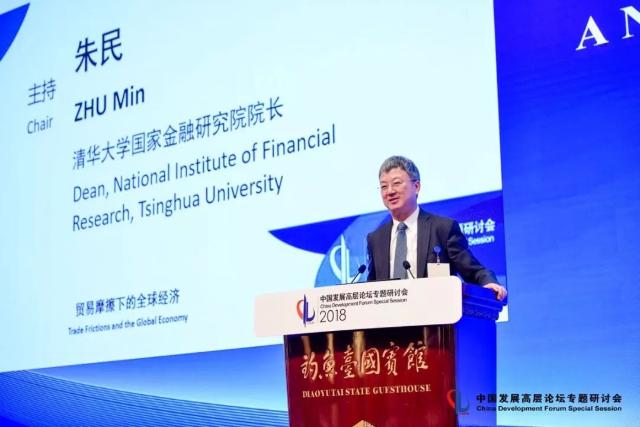
Zhu Min: The fundamental solution to trade disputes depends on the adjustment of the economic structure of the two countries.
Zhu Min, president of Tsinghua University National Institute of Finance, said that the settlement of trade disputes is only one aspect, and the most fundamental thing is to rely on the adjustment of domestic policies and economic structures of the two countries. It is a long process for the United States to increase savings and reduce consumption; It is also a long-term process for China to increase consumption and reduce savings.
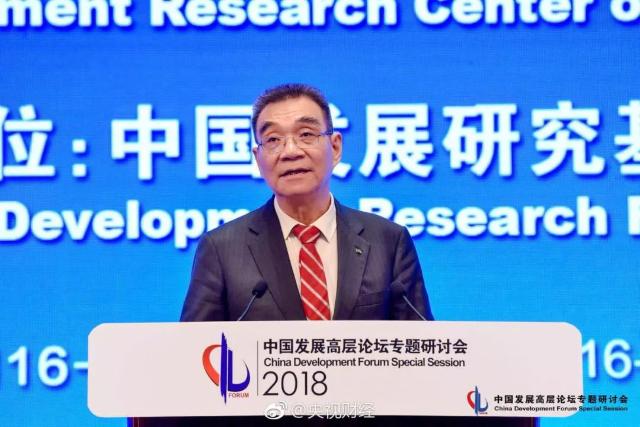
Lin Yifu: The Chinese and American economies are complementary, and trade is win-win.
Lin Yifu, honorary president and professor of the National Development Research Institute of Peking University, said that the economies of China and the United States are complementary and trade is win-win. China can provide cheap goods and low-cost intermediate products to American consumers. China can also provide a huge market for the United States, especially for high value-added services in the United States. So, this is a win-win situation.
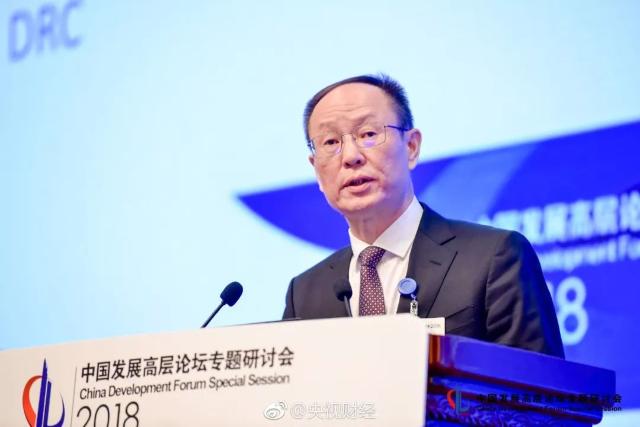
Wang Yiming: The best way for China not to fight a trade war to meet the challenge is to do its own thing.
On the issue of global trade friction, Wang Yiming, deputy director of the State Council Development Research Center, said that the United States has provoked trade friction and increased the difficulty of China’s economic transformation. China is unwilling to engage in trade war. The best way to deal with the challenge is to do its own thing well and turn external pressure into a driving force for reform and opening up.
China is actively relaxing market access. In June this year, it released a new negative list of foreign investment access, greatly expanded the opening of service industry, and is accelerating the implementation of the promised measures of opening up the financial industry and canceling the share ratio limit in manufacturing industry. China is taking various measures to expand imports. In July this year, it lowered the import tariffs on 1,449 items of commodities, and the first Import Commodities Fair will be held in November. China is also making great efforts to improve the business environment and strengthen the protection of intellectual property rights. China’s active opening-up is not only a strategic choice for China’s own development, but also will bring new opportunities to all countries in the world.
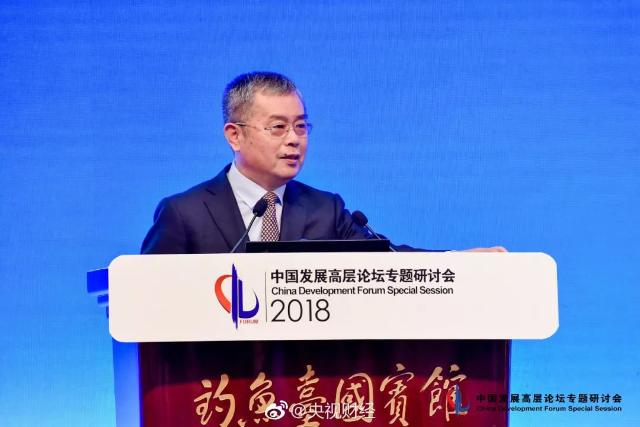
Li Yang: The policy of stabilizing leverage helps us to deal with the complicated economic and financial problems at present.
Li Yang, former vice president of China Academy of Social Sciences and chairman of the National Finance and Development Laboratory, said, we recognize that the rising leverage is a factor of China’s financial risk. At present, the policy we adopt is to stabilize leverage, which is more conducive to us to deal with the current complex economic and financial problems.