With one arrow and ten stars and the completion of the first-class rocket recovery at sea, Musk’s space dream goes further.
On the morning of October 9, local time, SpaceX, the Silicon Valley "Iron Man" Musk, successfully used the Falcon 9 carrier rocket to launch ten satellites for Iridium, and then the first-stage rocket was successfully recovered at sea again.
This also makes Musk one step closer to achieving his goal: in 2017, SpaceX’s plan is to complete 20-24 launches.
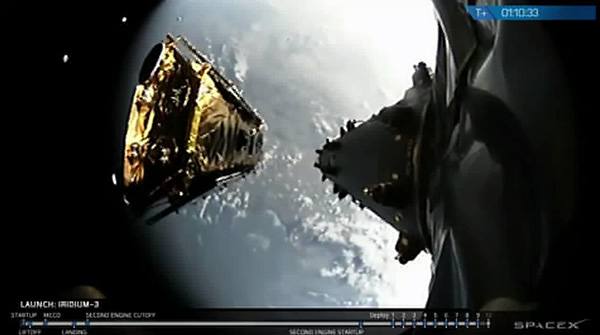
Ten satellites entered the scheduled orbit.
From the live broadcast at that time, after the rocket was launched for 7 minutes and 23 seconds, the Falcon 9 first-class rocket successfully landed on an unmanned barge in the Pacific Ocean. This is SpaceX’s 14th launch mission this year and the 17th successful recovery of Falcon 9 first-class rocket. In March of this year, Falcon 9 was successfully launched, recycled and re-launched.
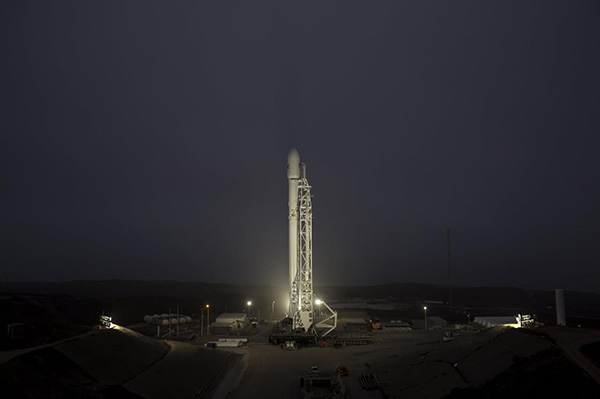
Falcon 9 is waiting for launch.
The Falcon 9 carrier rocket was launched in vandenberg air force base, California, USA. Satellites began to be deployed in low earth orbit about 57 minutes after launch. Shortly thereafter, the ground personnel announced in the live broadcast: "All 10 satellites were successfully put into orbit."
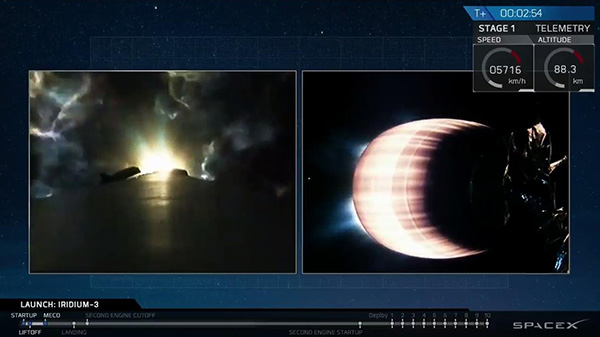
Rocket separation process
Interestingly, the Falcon 9 first-stage rocket landed on an unmanned ship in the Pacific Ocean, which is called "Just Read the Instructions", which means to let the rocket "watch the point and land according to the steps of the instructions" when landing. Another unmanned ship in the Atlantic Ocean is called "Of course, I still love you".
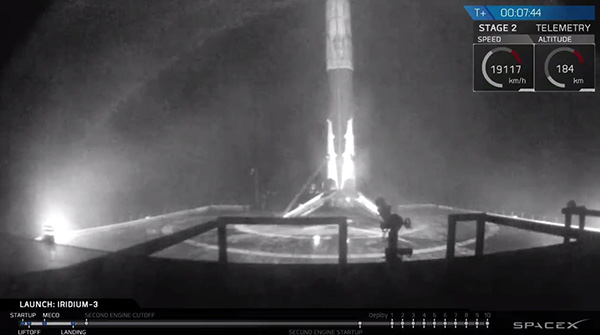
Falcon 9 landed on an unmanned barge at sea.
Musk said that this launch has also achieved the successful independent recovery of rockets and the reuse of "second-hand" rockets for launch, which has made revolutionary progress in reducing rocket launch costs.
Finally, it is worth mentioning that this is SpaceX’s third iridium satellite launch mission, and it plans to launch 75 satellites eventually, of which 66 are the main ones and 9 are the backup ones, which requires a total of 8 launches.
After this launch is completed, SpaceX will quickly move to the next task. Later this week, SpaceX will plan to launch broadcast satellites for SES and EchoStar. For this mission, SpaceX will use some parts of Falcon 9, which were previously launched in February. If this task is also completed, SpaceX will launch 15 missions this year, which is almost twice that of 2016. The successful launch has also brought the company one step closer to this year’s goal. The company plans to launch 20 -24 missions this year.
In addition to contracts with commercial satellite operators and the US military, SpaceX also signed a contract with the National Aeronautics and Space Administration (NASA) worth $1.6 billion to replenish supplies to the International Space Station, and another agreement worth $2.6 billion to help transport personnel to the laboratory of the International Space Station.