Xiaomi rushes out of the ecological chain: AI+IoT ambition behind the "three-ring" layout
Author: wei li
Design: Thomas
In 2014, the price of a WiFi connection module was more than 60 yuan; In 2018, the price of WiFi connection module was made in 9.9 yuan RMB by Xiaomi.
As a microcosm, this sharp reduction in hardware costs often means that the IoT industry is entering the growth period from the pioneering period, from small-scale exploration attempts to large-scale experience replication. At this stage, the expansion scope and expansion speed per unit time have become the core indicators for players in the industry to compete. For Xiaomi, building a larger connection and making AI ubiquitous will help him win this competition.
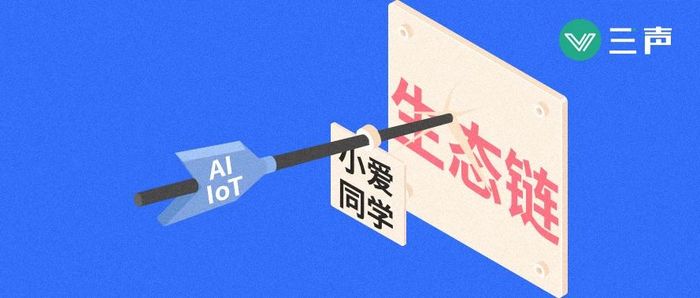
Constructing a complete "three-ring" layout is the need for Xiaomi to establish a larger-scale connection faster. The innermost ring of this model includes Xiaomi’s core products such as mobile phones, televisions, boxes, routers and smart speakers. The middle link is the IoT ecological chain system built by Xiaomi through investment incubation; The outermost ring will be a third-party manufacturer accessing the Xiaomi IoT system. Its advantage lies in that it can export the IoT ecological capacity quickly cultivated by the inner ring and the middle ring to the outermost ring.
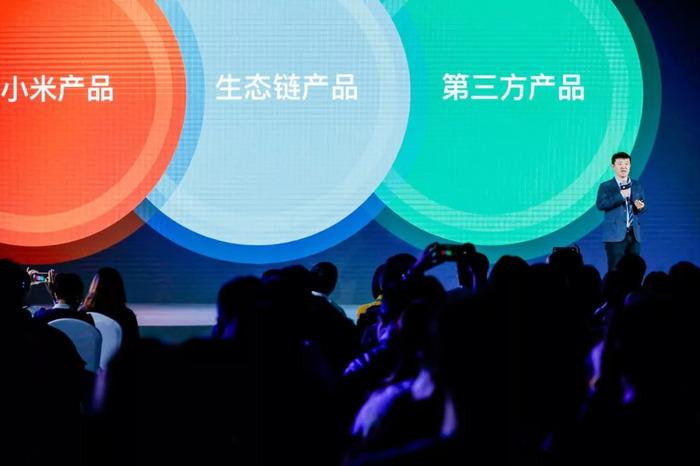
On the basis of the "three-ring" layout, with the increasing number of connected devices, Xiaomi can realize the ubiquity of AI voice assistants, and with this advantage, it can integrate content and services, achieve a breakthrough in the field of Internet services, and help Xiaomi become a veritable "Internet company". Even when Xiaomi AI voice assistant occupies the user’s mind, the potential energy of this AI+IoT will have the opportunity to make Xiaomi the underlying foundation in both C-end and B-end markets.
This is also the ambition of Xiaomi’s "AI+IoT" strategy: on the one hand, it is possible to connect as many smart devices as possible to realize the ubiquity of Xiao Ai’s classmates; on the other hand, through this ubiquitous advantage and the cultivation of users’ voice interaction habits, it will become the ultimate integration and presenter of content and services, and finally improve the commercial ecological construction of hardware+Internet services and break the inherent stereotype of "hardware companies".
Open the ecological chain and build a larger connection.
As the mobile phone market enters the stage of stock competition, the new incremental market of IoT is becoming a new battlefield for mobile phone manufacturers. Looking for the next growth point, this encounter in the IoT industry has a more important significance for mobile phone manufacturers, that is, mobile phone manufacturers have the opportunity to become the leader of new connection establishment on a larger scale by virtue of their natural advantages in the IoT hardware field, thus having more voice in the AIoT era.
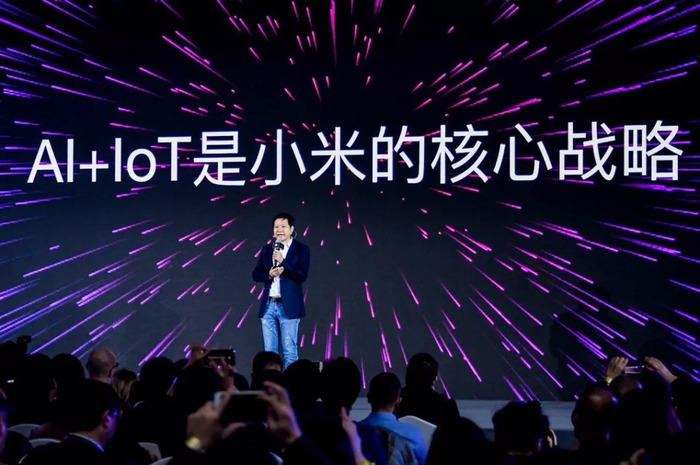
For this reason, Xiaomi founder and CEO Lei Jun said at the "MIDC·2018 Xiaomi AIoT Developers Conference" that in the next 5 to 10 years, AI+IoT will be the core strategy of Xiaomi. In establishing the connection between things, things and people, Xiaomi, which has an early layout, mature ecology and determination, has a certain first-Mover advantage, but it also needs to break through the misunderstanding that people can’t access the Xiaomi IoT system without joining the Xiaomi ecological chain, and show a more open Xiaomi, and make the outermost part bigger and bigger.
"Xiaomi’s investment is only to promote and strengthen this cooperation more effectively. This is what I want to explain to you today. Xiaomi’s determination to open up has not changed. I hope everyone can understand this." Lei Jun stressed. In his view, all giants are extremely optimistic about the AIoT industry, and the competition is becoming more and more fierce, which also requires Xiaomi to be more open than before.
On the basis of early exploration, sharing Xiaomi’s experience and ecological environment with more third-party manufacturers, helping them to complete the intelligentization of products more efficiently, and accessing more IoT systems with more users is the key for Xiaomi to lead the connection in the future. With the demand of users pushing more and more hardware manufacturers to seek the intelligence of hardware products, it is obvious that the way of ecological chain can no longer meet the pursuit of speed and scale.
From the data point of view, the "enclosure movement" in the IoT market has just begun. According to iResearch data, in 2017, the global market share of consumer-grade IoT hardware accounted for 1.7%, followed by Apple 0.9%, Amazon 0.9%, Samsung 0.7% and Google 0.6%. Although Xiaomi’s Q3 financial report in 2018 shows that the number of IoT consumer-grade IoT connected devices in Xiaomi has reached 132 million (excluding mobile phones and laptops), compared with the 15.3 billion IoT device connections predicted by iResearch in 2022, there is also a big gap.
In the past year, Xiaomi IoT platform has accessed more than 1,000 third-party products. During the developer conference, Xiaomi announced a cooperation with IKEA. Starting from December, all intelligent lighting products of IKEA will be connected to Xiaomi IoT platform, which can be controlled by Mijia and Xiaoai. In terms of connection technology, Xiaomi not only made the WiFi module RMB in 9.9 yuan, but also began to support the connection between ZigBee and Bluetooth Mesh.
Not only Xiaomi, but also BAT, Huawei and OV are striving for more third-party hardware access to their own IoT ecosystem. By introducing small speakers with obvious price advantages, Baidu has caught up with Xiaomi in the sales of smart speakers in the third quarter, with more than 300 DuerOS partners and more than 160 landing master devices equipped with DuerOS. The partners of the HiLink smart home platform established by Huawei have already included brands such as Opal, Jiuyang, Midea, Cobos, Bull, Haier, Boss and Iflytek.
According to an employee of a third-party manufacturer at the developer conference, Xiaomi’s advantage over other manufacturers lies in its ability to bring goods. Xiaomi itself has a large number of users with strong scientific and technological attributes, and is willing to try new things such as IoT devices. At the same time, Xiaomi also has its own new retail channels, which helps to help new products be quickly recognized by more users. "In e-commerce channels other than products, users often find our products by directly searching for product names instead of product categories, which has a lot to do with crowdfunding on products."
"In addition to providing developers with embedded software solutions, networked intelligent modules, unified APP experience and intelligent linkage, and reliable cloud services, we actually provide developers with new retail channels for incubating their own brand products — — Xiaomi has a product. " These tools in Fan Diankou, general manager of the IoT platform department of Xiaomi Group, are the chips for Xiaomi to break out of the eco-chain model and go to more third-party manufacturers, and are also the key to winning the advantage in the connection agreement dispute.
Get through three big rings, AI is everywhere.
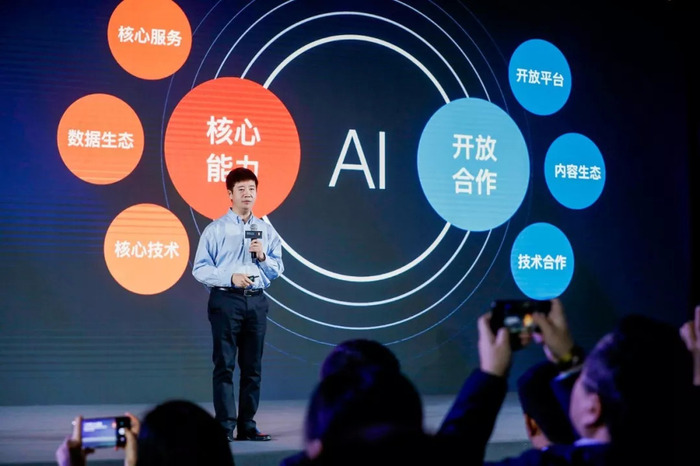
The establishment of more connections not only won the dominance of IoT connection agreement for Xiaomi, but also provided the foundation for Xiaomi to promote its AI voice assistant service to more users. In Xiaomi’s explanation of "AI+IoT strategy", open cooperation is a key word, which allows more devices to access Xiaomi’s IoT system and improve the "three-ring" layout; Core competence is also a key word, that is, to realize the communication of the three rings and jointly accomplish the goal of making Xiao AI’s AI ability ubiquitous.
"I believe that control technology such as AI+IoT will be embedded in every device in the future. There may not be a special device called smart speaker, or smart speaker will become a very small device. This technology is embedded in every device." Lei Jun said that in three to five years, every smart device may have the control module of AIoT, which will make the whole interaction very interesting.
What is interesting is that the intelligent voice assistant will become a powerful AI capability system, which is both an open platform and a strong ecology. One end of this system will be connected with all kinds of intelligent hardware, while the other end will be connected with content and services. In the middle, a well-run skill developer ecosystem is needed to develop different capabilities for this system and effectively connect hardware with content and services. On the basis of full hardware connection, voice assistant will become the ultimate integrator of hardware, content, service and AI technology.
"Xiaomi has a very deep layout in both mobile phones and IoT. It is based on the advantages of these Xiaomi on the end and based on the mature AI advantages, we feel that Xiaomi is standing on a bigger cusp today." Cui Baoqiu, vice president of artificial intelligence and cloud platform of Xiaomi Group, said.
In order to grasp this enthusiasm, Xiaomi provided Xiaoai students with the opportunity to run on other brands of Android phones and Apple phones by releasing Xiaoai students’ App+ Bluetooth devices separately. On the other hand, Xiaomi tried to integrate the content and function with Xiao Ai’s classmates, breaking the boundaries between the inherent apps, and cultivating users’ habits to directly summon content or services through Xiao Ai’s classmates.
In Cui Baoqiu’s introduction, there are now more than 200 smart devices that can support Xiao Ai’s control in 23 major categories, and this number is still growing at the rate of four (models) every Wednesday. At the same time, Xiao Ai also supports calling Microsoft Xiao Bing, and Xiaomi IoT system also supports connecting with Google Assistant and Amazon Alexa.
The simultaneous opening of the IoT system and AI capabilities has improved the speed of Xiaomi’s connection with IoT hardware, expanded the coverage of Xiaoai students, and accelerated the pace of Xiaomi’s integration of hardware, products, content and services.
"We should not only connect with smart device manufacturers, but also connect with Internet manufacturers. We should connect with APP developers of software and hardware, as well as skill developers. We should access AI technology companies and hope that various companies can help us provide services. We will fight for the world. In the end, all the green users in the upper layer will be served. Our users of Xiaomi are also users of everyone, and we are users together. " Cui Baoqiu said.
Users wake up and execute a specific function on mobile phones and intelligent hardware devices through voice commands, and behind this function are capability developers. These capability developers can independently choose which way their capabilities are carried by APP, applet or light application according to their needs. By connecting scenes and services, the AI voice assistant has presented the possibility of becoming a new front entrance, providing more imagination for Xiaomi.
Down-to-earth, longing for the starry sky
On the basis of the establishment of a wider range of connections, Xiaomi will be able to build a system including hardware, content and services: that is, Xiaomi takes IoT hardware as the carrier and implants its own AI capabilities into more hardware products by exporting its own hardware ecological chain capabilities; Then, with the ubiquitous AI voice assistant as a new entrance, more content and services are included in the ecology to realize the integration of hardware, content and services. Even, on the basis of this system, we have embarked on a bottom-up road of smart city construction.
Keeping the mobile phone business in the competition in the stock age, relying on users and ecological foundation to maintain its own advantages in the IoT market, and further strengthening the technical ability in AI, so that Xiaoai students can truly be everywhere, is the field that Xiaomi needs to step on in the C-end market, and the foundation of becoming a solution integrator.
If this attempt can be successful, it means that in the C-end market, a considerable number of users will choose to use Xiaomi’s intelligent hardware products to realize voice interaction through Xiaoai students, and at the same time, they will accumulate a large number of user data and ability developers with Xiaoai students. This accumulation is equally important for B-end users, which will make it possible for Xiaomi to March from the C-end market to the B-end market.
The cooperation between Xiaomi and All Seasons Hotel shows the possibility of expanding from C-end to B-end. At present, through this cooperation, Xiaomi has moved scenes such as small love speakers and intelligent lighting to the upcoming all-season Shanghai Hongqiao Center Hotel, where customers can experience Xiaomi’s smart home while traveling or on business, and play a role as a model room. When the users of IoT devices and Xiaoai classmates reach a certain number and become more and more dependent on voice interaction, it may become an inevitable user demand for hotels to install smart homes carrying Xiaoai classmates.
This will be a B-side change triggered by the accumulation of individual user needs. When Xiaoai students are ubiquitous, Xiaomi IoT system, which also grasps hardware, users, content and services, will also be able to extend to the depth of the industrial chain and undertake more service and management needs of B-side users.
"We have so many smart devices and have a good platform. Let’s start from this point. We will expand it from an individual user to a family, then expand it to the whole building and then to the community. Finally, through this platform, we will gradually make a real smart city." Wang Yulin, CEO of Jinshan Cloud, said.
Whether To C or To B, Xiaomi urgently needs to break out of the pattern of ecological chain and build a complete "three rings". On the basis of large-scale hardware equipment connection, it will complete its own ecological construction with the help of the potential energy of AI+IoT, so as to prepare for the coming AIoT era.
Because the competition in the AIoT era is destined to be a competition between different ecosystems, Xiaomi needs a complete ecology as a ticket for the final competition.