The front page of the overseas edition of People’s Daily praised Lijiazhai as a "good example": cherries are red all over Lijiazhai.


Cloudberry, Finland

avocado

Xing xing Xiao hong pi apple

Jackfruit hamburger

Cactus fruit

cashew
In recent years, domestic food documentaries have flourished, revealing the local cuisine with fireworks, as well as breakfast and supper, which have been subdivided into documentaries, one after another. Unexpectedly, fruit has also become the protagonist of the documentary. Last year’s "Fruit Biography" was called "the fruit on the tip of the tongue" by netizens, and it scored 8.7 points in Douban. Nowadays, under the background of rising fruit prices, the second season of Fruit Biography was launched. Looking at it, the reporter felt that these fruits were not affordable and available, but at the same time, they were found to be "too difficult", and some learned to "save themselves" in order to continue and survive; Some fortunately met human beings and avoided extinction. (Yangzi Evening News/Yangyan reporter Kong Xiaoping)
What?
Brazil berries and cloudberry, Finland can’t be bought online.
Biography of Fruits is the first documentary about fruits in China. Netizens affectionately call it a companion piece of online celebrity’s documentary A String of Life. "It’s too boring after watching the barbecue? Take a look at "Fruit Biography" to get tired of it. " Therefore, the "Fruit Biography" series is also called "domestic sweet drama".
There are 40 kinds of fruits in Fruit Biography 2. When the reporter saw the first episode of Brazil berries, he quickly searched where they were sold, and found that only processed jam was available. Brazil berries grow on the crown of palm trees 20 meters high in the Amazon rainforest, and it is almost impossible to pick them. And I was busy for half a day, and I couldn’t eat anything. The diameter of a Brazilian berry was between 7 and 10 mm, and the edible fruit only had a surface layer of 1 mm, and the rest were the stone … … Locals make jam to match with vegetables and fruits, or mix it with cassava flour to become staple food. Moreover, it is said that Brazil berry is rich in cellulose and unsaturated fatty acids, with low calorie and 20 times of antioxidant activity compared with blueberries, which can enhance immunity and is very popular among sports and fitness enthusiasts.
When I saw "cloudberry, Finland", I didn’t want to turn over my mobile phone. The documentary said that it grows in the Arctic Circle, and it can only be picked during the short extreme days of the year. In the film, two foreigners who went into the mountains to pick cloudberry were busy for a long time before they laid a bottom for the keg. The commentary is also in place, saying that it is "cold and needs a pollution-free environment and cannot be planted artificially".
What?
There are thousands of avocados.
Avocado is a well-deserved "online celebrity fruit" nowadays. It is one of the most popular fruits in supermarkets and e-commerce platforms. It is a frequent visitor to fitness meals, the protagonist of ins style and the source of inspiration for fashion circles.
However, I didn’t expect avocado to have thousands of varieties. "Fruit Biography 2" tells avocado from the perspective of Ken, a "fruit hunter" in Hawaii, USA. Ken used to be a chef. He was quite repulsive when he first ate avocado. Later, he fell in love with it, and even went full-time to Hawaii for avocado growth. In the past 40 years, he has only collected more than 400 varieties. In the lens, he picked avocados from many trees and found that the green of each variety is very different. There are many shapes, such as eggplant shape, palm size, egg size and white flesh … … And the taste is also different.
The documentary also showed how to eat a variety of avocados, and Ken also called a chef to hold an avocado taste contest. He named the avocados separately, and each chef scored them after tasting them, and finally ranked them according to the scores.
What?
The roots of Fuji apple trees are actually begonia.
"An apple a day keeps the doctor away." Most people actually don’t eat a few avocados a year, but most of the fruits they buy home every day will have apples. Although there are thousands of kinds of avocados, they will probably be defeated by apples. According to Fruit Biography 2, there were more than 20,000 kinds of apples in the world, and now there are more than 7,500 kinds.
For the sweet taste, foodies have domesticated those fruit trees with big and sweet fruits since the Stone Age, and changed the fate of apples through grafting. However, the sour wild apple varieties have gradually become extinct because they have not been favored by human beings, including the "Flower Apple of Kent" that hit Newton. Even if it is so famous, it has long since disappeared.
Do you know how Japanese Fuji apples, which are common in fruit stalls, come from? "Fruit Biography 2" introduces that it is a variety successfully bred by fruit farmers in Aomori Prefecture, Japan, with American Guoguang and Marshal Hong, and their roots are not apple trees, but begonia, which is simply "an apple over begonia"!
So you will find that even apples have become the most familiar "strange fruit": have you seen purple apples? What the hell is a fox apple? What’s the taste of the small red apple with stars?
What?
Carambola beer, jackfruit burger ≠ dark cuisine
After reading it for a long time, I finally saw two familiar fruits, carambola and jackfruit. The reporter was very pleased. But carambola can actually brew beer, jackfruit can also be used as a staple food, and some people have developed jackfruit burgers. The reporter couldn’t help wondering, is this a dark dish?
In the film, two Guangdong winemakers took a fancy to the sweetness and sweetness of carambola, and combined with the beer brewing technology, the brewed carambola beer looked very refreshing. However, because of its high sugar content and high protein, jackfruit is very qualified as a fruit. Unexpectedly, because of its high fiber content, immature jackfruit can become "fake meat" and be developed into a new food by human beings who love to eat. "Fruit Biography 2" presents a jackfruit burger, which is said to taste like meat as long as it is cooked for a long time. The reporter visually observed that in this era of pursuing healthy eating, it will soon join the recipes of healthy meals.
What?
Cactus fruit should also be a "new online celebrity"
When I saw the children in Fruit Biography 2 waiting to eat cactus fruit, the reporters felt very embarrassed. The cactus photographed in the film grows in the Yarlung Zangbo Grand Canyon, one piece of cactus land. Every September, pink fruit is covered with barbs, and it is not impossible to eat it happily. The locals in the film brush it back and forth with rattan and brush off the barbs. There is a scene in which a horse eats cactus fruit by himself. The local people laughed and said that there are often cows, horses and pigs who are thirsty and bite it rashly. As a result, they can’t eat grass because of their stinging mouth, so they are getting thinner and thinner, which is simply a "good medicine for losing weight at home".
The local people described this cactus fruit as refreshing as pitaya, soft and waxy as fig, and rich in polysaccharides, amino acids, pectin and trace elements, which can quickly restore physical fitness. No, a local man took his children to practice riding and gave them more than 10 meals. Cactus fruit is not difficult to buy. The reporter saw that there is news on the Internet that some merchants have added it as an ingredient in milk tea, and the taste is probably quite refreshing and delicious.
A lot of cold knowledge, fruits are really "too difficult"
In order to save themselves, cashew nuts learn to "imitate" cactus life "in two shifts"
Why did the reporter swallow his saliva and watch Fruit Biography 2 in one breath? Because it is not only a documentary about how delicious fruits are, but also the commentary is particularly witty and easy to understand, and it can also enrich knowledge, which makes people sincerely sigh: fruits are really "too difficult".
Some fruits have learned to "save themselves" in order to continue and survive in the long life of the universe.
For example, Brazilian berries are also racking their brains to survive. In order to spread their seeds better, they have evolved into the dark color that attracts birds the most! Let birds eat themselves, and then spread seeds through bird droppings.
And cashew nuts, which can be a cover-up. They grow fake pears that attract animals and "imitate" themselves into a fruit, while the real seed, cashew kernel, is hidden under the fake fruit, with a hard shell and secretes substances that can corrode the skin to protect the seeds.
Cactus is not easy either. Every day, you have to "stay up late" and live a life of "two shifts". Usually, plants carry out photosynthesis during the day, but if the cactus with water reserves opens its stomata during the hot day, it will be suicidal, so it has to "absorb light" during the day and "inhale" at night.
Thanks to the help of human beings, avocado and papaya got rid of the extinction crisis.
But in the harsh natural selection, sometimes it is not enough to rely on the fruit itself. Although humans love to eat fruit, they can also help.
Just now, when the reporter saw the scores of the avocado contest, he was amazed. It turned out that the competition in the avocado industry was so fierce, but in fact, it was almost extinct. It turns out that avocado has a history of tens of thousands of years on earth, but its size and seeds are too big for ordinary birds to hold, and it has become a problem to spread seeds. At that time, it was the staple food of the ground sloth. In order to adapt to it, the ground sloth even evolved a special stomach, so that the stone of avocado could be completely excreted. Later, the ground sloth unfortunately became extinct. Fortunately, avocado met human beings about 6000 years ago, and only under the protection of human beings did it escape the disaster of extinction. In order to reflect this passage, the documentary is represented by cartoons, and the ground sloth looks particularly cute.
There is also papaya. There was an extinction crisis of papaya in Hawaii. Fortunately, human beings created a net room to resist the invasion of aphids that brought this virus and successfully saved the life of papaya.
Reporter interview: The "fruit hunter" who collects exotic fruits is also the main force.
To sum up, Fruit Biography 2 conveys many levels of content. Su Lei, the director of Fruit Biography 2, said in an interview that Fruit Biography 2 tells eight theme stories of "running-in, collision, getting along, transformation and transformation between fruits and themselves, nature and human beings", presenting a "natural wisdom show" with temperature, but also reflecting the interactive relationship between human beings and fruits.
It is worth mentioning that the reporter saw that many netizens drooled and asked if some of these "exotic fruits" would be introduced. In this regard, Su Lei said with a smile, in fact, there were a lot of "goods" in the first season. Among them, chocolate oranges and finger oranges produced in Australia and known as "caviar in fruits" were quickly introduced by domestic e-commerce. This time, the film crew traveled to dozens of countries, including Asia, Africa, Europe, Oceania, Kenya’s indigenous tribes, and Brazil’s mysterious rainforest, with many novel fruits behind them. Nowadays, e-commerce has such a keen sense of smell that if some fruits in the second season are suitable for introduction, there should be some.
Regarding how to collect these exotic fruits, Su Lei said, just like Ken, the American "fruit hunter" mentioned in Fruit Biography 2, the program group consulted many botanists and professors, and also consulted many "fruit hunters" at home and abroad to help provide clues. "Nowadays, many e-commerce platforms have professional buyers abroad. In fact, fruits are also a kind of professional buyers, and they are also fruit hunters."
Su Lei told reporters that there are also "fruit hunters" in China. In the first season, Yang Xiaoyang, a "fruit hunter", helped to find the Malaysian "water coconut", which is an ancient species left over from the Quaternary glaciers. Under the hard shell of the water coconut, it is soft and crystal-clear pulp, which tastes like jelly pudding.
In addition, she also said that "Fruit Biography 2" is also technically "painstaking". 4K cameras and large aerial photography have been "routine operations", and technologies such as high-speed photography, time-lapse photography, macro photography and shed photography have enabled the nuanced parts of fruits to be displayed. For example, in order to show the hard "armor shell" and thick flesh of Indian jackfruit, microphotography was used. With the help of advanced photography technology, the audience further felt the charm of fruit. (Kong Xiaoping)


Image source ppbc: Liu Bing
Image source: www.kenphoto.com
Image source: wikipedia
Image source: wiki 
Image source ppbc: Zhu Xinxin


Recently, Guangzhou Intellectual Property Court made a second-instance judgment on the case of Jin Yong v. Juvenile here, and found that the defendant constituted copyright infringement and unfair competition. This intellectual property case, which lasted for seven years, was amended in the second instance because it did not constitute infringement, which caused widespread concern and controversy in the academic and industrial circles about the creative boundary of the works of the same person.
The so-called fan works generally refer to new works created by using the same or similar characters in existing works. Teenagers here (hereinafter referred to as "Here") is an online literature created by dozens of people of the same name in Jin Yong’s works, such as Guo Jing, Huang Rong and Ling Huchong, and the plot is the story of youth on modern campus. When it was published in 2002, the book was promoted with the subtitle "The University Life of the Condor Heroes". In 2016, the Tianhe District Court of Guangzhou accepted Jin Yong’s lawsuit, which was considered as "the first case of a fan’s work".
The judgment of the second instance is the first in China to confirm that Jin Yong’s novel "Portrait of People" is protected by copyright, which breaks through many people’s understanding of the boundary of copyright protection. Some people even think that this may "subvert the whole fan culture industry".

Fan fiction’s Teenagers Here, 2002 edition.
Cold case of works twenty years ago: Jin Yong sued fan fiction for plagiarism.
Back in 2000, Richard, who graduated from Peking University, decided to create a novel featuring characters in many works, such as Legend of the Condor Heroes, Eight Dragons, the legendary swordsman and The Condor Heroes, when he was abroad. This novel, called Here, takes the virtual Bianjing University in the Jiayou period of the Song Dynasty as the time and space background, and tells the youth campus stories of Guo Jing, Ling Huchong, Qiao Feng, Yang Kang and Duan Yu. The characters in the book are similar to those in Jin Yong’s novels, with some similarities and some differences, and the story content is modern narrative. For example, Guo Jing, a freshman in chemistry department, ran into Huang Rong, a freshman in physics department, by bike, and then fetched water, cooked rice and took out the garbage for him every day, and finally got married. Duan Yu launched a series of pursuits for Wang Yuyan from a single-parent family without success.
Originally published on the Internet, "Here" won the favor of the publishing house, was first published in 2002, and was promoted with the subtitle "The College Life of the Condor Heroes". In 2009, under the guidance of the Chinese Writers Association, China Writers Publishing Group, Novel Selection Magazine and Chinese Online jointly held the "Ten Years Inventory of Network Literature", and Here won the top ten outstanding works. Yang Zhi, whose pen name is "Jiangnan", was famous all over the world for a time. By the time of prosecution, Here had been published in several editions and distributed in millions of copies.
In 2016, Jin Yong sued the Tianhe District Court in Guangzhou, claiming that the names of the characters described in Here are all derived from the above four works, and the relationship between the characters, their personality characteristics and story lines are substantially similar to those of his works, which is plagiarism, infringing on his rights of adaptation, authorship, protection of the integrity of works, commercialization of characters, etc., and based on the high popularity of his works, Richard’s misappropriation of the original elements of the above works has made great profits and hindered.
The case of Jin Yong (real name: Cha Liangyong) v. Jiangnan attracted attention in the intellectual property field in that year. Many scholars wrote articles to express their views on whether the elements in Jin Yong’s novels used in Here were copied from Jin Yong’s works.
The recognized formula for identifying infringing works is "contact+substantial similarity". As a fan of Jin Yong, there is no doubt that Richard came into contact with his works. Then, the identification of "substantial similarity" of works becomes the key.
As for what constitutes "substantial similarity", the courts of first and second instance all analyze the "overall character image composed of characters’ names, personality characteristics, relationships and other elements, and related storylines" prosecuted by Jin Yong.
First of all, in terms of the plot, the courts of first and second instance all think that Here does not constitute substantial similarity.
According to the court of second instance, plot is one of the three basic elements of a novel, which is usually composed of many elements, such as the setting of characters, the relationship between characters, scenes, clues to the development of stories and so on. The plot can be either a relatively abstract story summary or a more specific detail presentation. If the specific plot is original and fully described, it can become the object of copyright law protection. The abstract plot may be an unprotected "thought" or a protected "expression".
The court of second instance held that, compared with Cha Liangyong’s four works involved in the case, the plot of Here is different in time and space, and the clues and events that promote the development of the story, the design and arrangement of specific story scenes, the internal logic and causality of the story are all different, so the expression of the two does not constitute substantial similarity. Therefore, the copyright of the corresponding storylines in Cha Liangyong’s four works involved in the case was not infringed.
The differences in the first and second trials are as follows: Is the "overall character image composed of characters’ names, personality characteristics, relationships and other elements divorced from the story" an expression protected by copyright? That is, if the three are not protected, even if they are the same or similar in the works involved, will they constitute infringement?

A follow-up version of "The Boys Here"
First instance: abstract formal similarity will not lead readers to have similar appreciation experience.
According to the dichotomy of thought and expression, copyright law has a basic theory: "not protecting thought, only protecting original expression of thought". "That is to say, for the names, personality characteristics and relationships of characters in literary works, it is either thought or expression. If it is brought into the plot, it is part of expression. If it is not brought into the plot at all, it is thought." Wang Qian, a famous intellectual property scholar and professor of East China University of Political Science and Law, introduced.
In relevant judicial precedents, names and titles of works do not constitute original expressions, works and are not protected by copyright law. Wang Qian wrote in the Course of Intellectual Property Law that "the simple combination of words, words and vocabulary that exist alone should remain in the public domain and become the basic materials for creation". A typical case is that CCTV produced a documentary with the same name as the book China on the Tip of the Tongue and was sued for infringement. The court held that the title itself did not contain any ideological content, did not meet the requirements of the originality of the work, and was not a special expression of the author’s thoughts, so it was not protected by copyright law.
An industry consensus is that people’s names are not copyrightable. The same is true of the relationship between characters. In the previous case of "Zhuang Yu v. Jing M.Guo", the judgment held that "simple character characteristics, such as the appearance, personality and quality of the characters, or simple character relationships, such as the relationship between lovers and mother and daughter, all belong to the public domain, and do not belong to the object of copyright law protection."
The court of first instance of Here held that "in the field of literary creation, the articles and works take novels as an example, and their contents are mainly composed of three elements … … It is often difficult to form a specific expression without the simple elements of the name, relationship and personality characteristics of the specific story. "
The judgment of the first instance quoted Professor Wang Qian’s opinion in the article "A Preliminary Study on Copyright Infringement of Fan Works" (published in China Copyright, No.3, 2017). "Only using the role names, simple gender characteristics and simple relationships between roles extracted from specific plots is more to identify symbols, and it is difficult to form a substantive similarity with the original works."
In an interview with The Paper, Wang Qian further explained, "Just pick a passage from Here and rename it one by one. Huang Rong changed to Zhang San, Guo Jing changed to Li Si, Qiao Feng changed to Wang Wu, etc. After the role name was changed, I don’t believe that any reader will think of Jin Yong’s novels after reading it. This shows that the only connection between Here and Jin Yong’s works is the name of the characters, with some generalized characters and relationships, which should be regarded as unprotected thoughts. "
In order to explain the typical performance of copyright infringement, Wang Qian also cited the previous "Qiong Yao v. Zheng Zheng case" as an example. "Yu Zheng’s script uses a completely different character name from Qiong Yao’s novel, but the main plot is the same. Anyone who has seen Plum Blossom Branding and then goes to Palace Lock Together knows that this plot comes from Plum Blossom Branding. This situation is infringement. "Here" is just the opposite. As long as the name of the character is changed, all its connections with Jin Yong’s novels are completely cut off, so it does not constitute infringement. "
The court of first instance held that "Here" and Cha Liangyong’s works only have abstract formal similarities in the names, relationships, personality characteristics and story plots, which will not lead to the same or similar appreciation experience for readers, and they do not constitute substantial similarities.
This is in line with the views of many experts: the characters, personalities, relationships and other elements belong to the category of public materials and cannot be monopolized. Only when these elements are fully, clearly, concretely and uniquely described in a series of stories, can they be protected by copyright law.
The court of first instance, while finding that Here does not constitute copyright infringement, held that it violated the Anti-Unfair Competition Law, and sentenced Richard and the sued publishing house to pay Jin Yong 1.68 million yuan and 200,000 yuan in legal fees according to 30% of the publishing royalties of Here over the years.

Brief introduction of Taobao about the book.
Subversive judgment: the overall character image is recognized as a protected "expression"
After the judgment of the first instance, both Jin Yong and Yang Zhi refused to accept the appeal. During the second trial, on October 30, 2018, Mr. Jin Yong died in Hong Kong, and his heir Lin Leyi participated in the lawsuit. Five years later, on April 23, 2023, Guangzhou Intellectual Property Court ruled in the second instance that Here constituted copyright infringement and unfair competition, and maintained the total amount of compensation of 1.88 million yuan.
The court of second instance held that "in this case, most of the characters’ names in" Teenagers Here "came from Cha Liangyong’s four novels involved in the case, and there are many similarities in the characters, relationships and backgrounds of the main characters. Although it is difficult to say that a single character image has been fully and uniquely described, on the whole, the group image composed of more than 60 characters, such as Guo Jing, Huang Rong, Qiao Feng and Ling Huchong, reflects Cha Liangyong’s choice and arrangement in the name, personality characteristics, relationship and background of the characters, and can be considered as fully described and concrete enough to form a structure with strong logical connection among internal elements, which is protected by copyright law & Expression ’ 。” Furthermore, it is concluded that "Here" plagiarizes the names, personality characteristics and relationship of characters in Jin Yong’s four works, which is prohibited by copyright law.
In fact, after the first-instance non-infringement judgment was issued, there were different voices. For example, three lawyers of Beijing King & Wood Law Firm, Sun Mingfei, Gui Hongxia and Tao Tao, wrote in the media "Intellectual Property" that the characters in literary works are original expressions protected by copyright law. "As far as characters are concerned, a single character name or a character with simple personality and interpersonal relationship obviously cannot constitute the protection object of copyright law. However, when people mention a character’s name, what they really want to convey is the plump character … … Copyright law protects not monotonous characters’ names, but three-dimensional and plump characters. As mentioned above, these characters are an important part of the original expression of the plaintiff’s novels. The later citation, no matter whether the words used are Guo Jing, jing elder brother or Guo Daxia, as long as the details including the relationship between characters and the plot are enough to make the audience’s mind emerge with rich original expressions of specific characters in the original work, they will enter the prohibited scope of the copyright of the original work. "
However, in the opinion of some experts, copyright protection of "group portraits" and "character images" is a kind of "subversion" and "breakthrough".
Tao Gan, director of the Intellectual Property Innovation and Competition Research Center of China University of Political Science and Law, thought that if the roles in literary works were protected separately, it would violate the basic jurisprudence of the Copyright Law. Characters in literary works are different from cartoon characters and movie characters, and their shaping needs to be mapped in readers’ minds through the author’s literal description, which is difficult to separate from thoughts. Therefore, the role divorced from words, plots and scenes cannot exist independently of the work.
Zhang Hongbo, Director-General of the Literary and Art Association, believes that if the characters and relationships in the works of the same person are identified as the objects of separate protection by copyright law, many works of the same person and new works created by rational use of existing works will easily be accused of infringement, which will have a very terrible social effect.
"This is the first China court to recognize literary works ‘ Group portraits ’ In response to the judgment of the second instance, Jin Shui, an intellectual property legal worker, published an article in the Economic Observer, saying that the judgment of this case may subvert the entire cultural industry of the same people. "After the names of characters in literary works are protected by copyright law, how much space is left for the public to use freely?
In the above seminar, Zheng Xiqing, an assistant researcher at the Institute of Literature of China Academy of Social Sciences, said, "It is common in the history of world literature to use pre-existing characters and storylines like fan fiction and re-imagine stories on the basis of them. If fan writing is characterized as plagiarism, then the history of literature is full of plagiarism. "
Zheng Xiqing introduced that there are spontaneously established "re-creation organizations" abroad. They use the term "transformational writing" to refer to fan literature, emphasizing that fan’s re-creation of plots and characters in existing literary works belongs to adding new content or adaptation on the basis of the original work, rather than copying and repeating without innovation, that is, rational use, which does not belong to infringement of intellectual property rights.
He Hong, director of the Network Literature Center of the Chinese Writers Association, said that fan writing is an important phenomenon in the whole literary creation. Jin Ping Mei can be regarded as the fan fiction of Water Margin, and online works such as Tales of Charm, The Story of Wukong and The Diary of Friar Sand can all be classified into the category of fan writing. The interactive characteristics of online literature promote the development of fan writing. Even in an extreme sense, the future literature may no longer be a single text, but an infinitely extended text network.
Balance of interests: prosperity of cultural undertakings and "non-stop infringement"
It is worth mentioning that the controversial judgment of the second instance has also given full consideration to the development of fan literature industry.
While finding that Richard and others constituted copyright infringement and unfair competition, the court of second instance did not decide to stop the infringement and apologize in accordance with the statutory tort liability, nor did it decide to stop publishing Here and destroy the inventory as in the first instance. It also supported that Here could be reprinted by paying financial compensation to Jin Yong’s heirs. According to the proportion of the elements used in Here in Jin Yong’s complete works, the specific compensation standard is determined as 30% of the reprint royalty income as appropriate.
In this regard, the court of second instance explained that "protecting the interests of creators and disseminators of works is the direct purpose of copyright law, but promoting the development and prosperity of scientific and cultural undertakings is the ultimate purpose of copyright law. When the direct purpose conflicts with the ultimate goal, the emphasis on the direct purpose should give way to the realization of the ultimate goal. Knowledge has historical inheritance, and any knowledge is both the final product and the intermediate input. For literary creation, imitation and reference have always been common means, no matter ancient or modern, Chinese or foreign. Therefore, the way of civil liability for literary works cannot be generalized to stop infringement, and it is necessary to carefully consider the case and fully balance the interests of all parties. "
The Paper noted that in the appeal of the second instance, Jin Yong mentioned that Here violated his right to commercialize the characters in famous works. "Cha Liangyong created Guo Jing, Huang Rong and other classic characters with original character setting, story and language. With the wide spread of the works, these characters are deeply rooted in people’s hearts and have formed a solidified image in readers’ minds, which can exist to some extent without the specific story of the original. Because of this, they are reproducible and deductive, and also have high commercial use value. "Here" uses these famous characters for publishing without permission, which is a typical commercial use. " However, the court of first instance held that the copyright law does not have the protection of "the commercialization right of characters" and did not support this request.
The courts at both levels recognized that when The Here was first published in 2002, it was subtitled "The University Life of the Condor Heroes", and its own works were directed at Cha Liangyong’s works, with the obvious intention of attracting readers to gain benefits through the influence of Cha Liangyong’s works. Therefore, Richard’s behavior is unfair, which deviates from the business ethics recognized by the cultural industry and should be prohibited by the anti-unfair competition law.
Wang Qian still reserves his opinion on the judgment of the court of second instance that the infringement does not stop, which balances the interests of all parties.
"Here does make use of the popularity of the characters in Jin Yong’s novels, but using popularity and using works are two different things, not a concept. Due to the use of popularity ‘ Hitchhiking ’ The problem can be solved through the anti-unfair competition law, not the issue to be discussed in the copyright law. "
At the seminar of the China Literature and Art Association mentioned above, the Chairman of the Copyright Committee of the China Branch of the International Intellectual Property Protection Association (AIPPI) introduced that in the United States and Canada, the principle of judicial treatment of the role of a fan’s work in local laws and regulations is usually regarded as "Fair Use" or "Fair Dealing", that is, "fair use" or "fair use". However, there are corresponding restrictions under certain circumstances. For example, the name of a persona has been registered as a trademark, which can be protected by the Trademark Law, but it is still outside the scope of copyright regulation.
Li Yang, a professor at the School of Civil and Commercial Economics of China University of Political Science and Law, also believes that the really controversial issue in this case is — — If the content of Jin Yong’s lawsuit is not protected by the Copyright Law, can it be protected by the Anti-Unfair Competition Law as a commercialized right? In this regard, he advocated the "policy theory of intellectual property law" and advocated that many factors should be comprehensively considered, such as whether the plaintiff advocated the protection of commercialization elements, and whether it paid corresponding labor and investment; Whether allowing the defendant to "hitchhike" will seriously harm the interests of the plaintiff; Prohibiting the defendant’s "hitchhiking" behavior will seriously damage the defendant’s freedom of expression and economic activities. In short, "we should not oversimplify it, but take into account the relationship between monopoly and competition, and reasonably balance the interests of the obligee and the public." Li Yang said.
The Paper noted that the court of second instance also rejected the appellant’s request for apology. "There is no evidence that his behavior has had a bad influence on the reputation of the copyright owner of the above works. As far as unfair competition is concerned, Richard’s unfair competition will indeed lead to public confusion, but the infringement is not serious enough to make an apology, and publishing a statement is enough to eliminate the adverse effects. " The judgment is written.


Attendants in karaoke bars found "business opportunities" to make money during their work. In the following 11 months, they set up a team to cajole and organize dozens of underage girls to KTV for paid escort, involving more than 8 million yuan … Recently, the Procuratorate of Xiantao City, Hubei Province prosecuted 15 suspects including Liu for allegedly organizing minors to violate public security management activities. At the same time, the procuratorial organs can actively perform their duties, actively carry out traceability management, and urge functional departments to rectify the chaos of paid escorts.
Lure underage girls into "working" in karaoke bars
In April 2019, 32-year-old Liu went to a karaoke bar in Xiantao as a waiter. During the work break, he was smart and smelled "business opportunities". "I saw the opportunity to make money in this industry, and I began to ponder to bring my little sister to accompany me with pay and make money from my little sister." The "little sister" in Liu’s mouth is a group of underage girls from Yunnan.
From April 2021 to March this year, under the leadership of Liu, four people, including Li and Duan, were shareholders, and another 10 employees were hired to form a team. With the team management mode of "shareholders’ commission+employees’ fixed salary", dozens of underage girls were organized from Yunnan to Xiantao’s entertainment venues for paid accompaniment, drinking and playing. The average number of underage girls controlled by the gang is more than 40 per day, reaching 60 or 70 at the time of its largest scale.
"They were introduced to each other through classmates and friends. After contacting with social software, we booked tickets for them." One of the shareholders of the gang, the suspect who was only 17 years old at the time of committing the crime and nicknamed "Little Water Drops" confessed.
"I told her to buy her a high-end mobile phone after work, and let her ask if there are any other classmates and friends who want to go to work in other places. If you are willing to come, I will buy them mobile phones. " Chen Mou, a criminal suspect nicknamed "Fat Man", has organized a number of underage girls to accompany him in Xiantao for a profit by cajoling and cheating.
"Don’t play mobile phones at work, don’t accept guests’ escort fees privately, don’t ask for leave at will, and don’t run away privately …" For this group of underage girls, Liu conducted unified management and training, and organized and arranged underage girls to pay escorts to KTV through WeChat group, and the escort income was 100 yuan per hour. The gang involved more than 8 million yuan, and Liu and others made a profit of more than 4 million yuan.
Prosecutors intervene in advance to guide the investigation.
On the evening of March 10 this year, when Liu organized several underage girls to accompany them in a KTV, they were discovered by the patrolling police and were subsequently put on file for investigation.
After learning the clues of the case, Xiantao City Procuratorate intervened in advance according to law and followed up in time. By consulting evidence materials and convening a joint meeting of prosecutors and police, the court believes that Liu and others, for the purpose of making profits, organize minors to accompany them in entertainment places and other activities that violate public security management, which not only endangers social security management and the normal teaching order of schools, but also infringes on minors’ right to education and health, and puts them at risk of possible infringement, or induces them to embark on the road of illegal and criminal activities, and should be investigated for criminal responsibility for organizing minors to violate public security management activities.
In order to effectively accuse crimes, Xiantao City Procuratorate put forward suggestions to the public security organs to further improve the collection of fixed evidence and pursue accomplices. At the same time, the hospital suggested that the city public security bureau impose administrative penalties on the KTV operators involved, and then the public security organs ordered the KTV to suspend business for rectification according to law.
Multi-party efforts to promote traceability management
In March this year, the Xiantao City Procuratorate invited the Municipal Public Security Bureau, the Cultural Tourism Bureau, the Civil Affairs Bureau, the Market Supervision Administration and other functional departments to hold a joint meeting on the topic of protecting the legitimate rights and interests of minors. Subsequently, with the assistance of Xiantao Public Security Bureau, Civil Affairs Bureau and other departments, dozens of underage girls controlled by the criminal gang were all sent back to their hometowns.
At the same time, in view of the industrial chaos found in handling cases, Xiantao City Procuratorate sent procuratorial suggestions to the Municipal Public Security Bureau and the Municipal Bureau of Culture and Tourism, respectively, urging to strengthen supervision over entertainment places such as KTV and bars in the city, and focusing on investigating and dealing with the employment of entertainment places, organizing minors to engage in paid escort services or taking other business practices that infringe on the legitimate rights and interests of minors, so as to create a good social environment for the healthy growth of minors.
After receiving the procuratorial suggestions, all functional departments will rectify the problems and system loopholes reflected in the case. Xiantao City Public Security Bureau carried out centralized rectification actions on the city’s leisure and entertainment places, and included this action in the annual assessment scope of public security work; The Municipal Bureau of Culture and Tourism launched a two-month summer cultural market and campus surrounding environment rectification campaign, and severely investigated and dealt with illegal acceptance of minors in KTV, Internet cafes and other business premises. At present, relevant actions are still in progress.
In view of the implementation of the procuratorial suggestions in the previous stage, on July 28th, Xiantao City Procuratorate once again convened a consultation meeting on the protection of minors’ rights and interests, and invited relevant functional departments such as the Municipal Public Security Bureau and the Municipal Bureau of Culture and Tourism to hold consultations on the next joint rectification action to strengthen the integrated protection of minors. (Procuratorate Daily, Jiang Changshun, Huang Cong)

Yu Na resembles Lang Ping when he was young?

Be meticulous in filming
Changjiang Daily News Many viewers in China still remember the Japanese TV series Volleyball Girl introduced by CCTV in 1983. Junko Little Deer, the "Volleyball Girl" who ran a horse race, deeply shocked the hearts of a generation. Today, more than 20 years later, at the moment when the "2008 Beijing Olympic Games" is about to be unveiled, the 20 episodes of the youth inspirational drama Volleyball Woman directed by the famous director Junkai Zhao are currently being shot in Wuhan. The Volleyball Woman is based on the ten-year story of China women’s volleyball team rising from the bottom in 1994 to 2004. In these ten years, the older generation women’s volleyball team has created a miracle of five consecutive championships. The female prototype No.1 played by supermodel Yu Na is Lang Ping.
The Volleyball Woman tells the story of Sheng Xiaomei who is forced by her family to practice volleyball by mistake. Sheng Xiaomei became a monk halfway, but her excellent physical condition laid the foundation for her to become the main attacker of the national team. In the city sports school, Sheng Xiaomei and her friend Li Xueli went through all kinds of hardships, changing from friends to competitors, and their careers have experienced ups and downs. In the end, Li Xue, who became the captain of the national women’s volleyball team, led all the players to win the Olympic tickets and win the Olympic gold medal that had been lost for 20 years.
According to director Junkai Zhao, The Volleyball Woman is based on the 10-year story of China women’s volleyball team’s rise from the trough from 1994 to 2004. In these 10 years, the spirit of women’s volleyball team’s rise from the trough is the most powerful, and the older generation of women’s volleyball team has created a miracle of five consecutive championships. Therefore, the China version of Volleyball Woman is a group portrait of the women’s volleyball team, which not only focuses on Sheng Xiaomei, but also shows the setters, coaches and women’s volleyball players who lost the national team. The whole drama shows the team spirit of the women’s volleyball team in China.
On the set, the reporter saw that each actor’s body was covered with bruises, but they couldn’t take care of them. They were divided into two groups and practiced smash and block on both sides of the volleyball court. In another corner, Yu Na was shooting a shot of being knocked down by volleyball, only to see the coach slamming the ball on Yu Na, and then Yu Na was knocked to the ground. The shooting angle can’t be in place at one time, so I have to do it again and again. After repeated times, I finally found the right angle. The ball flew on Yu Na again, and the director said, Yu Na was lying on the ground, too tired to get up for a long time.
After a short rest, we then filmed a scene in which the two sides fought each other, and Yu Na became the main attacker again. I saw that she jumped up and spiked, and each stroke was quite lethal. Yu Na said, this is a women’s volleyball play, of course, it is worthwhile to carry forward the spirit of women’s volleyball, and it is worthwhile to suffer a little. However, the feeling of spiking is really great.
Yuna: Play Lang Ping from scratch.
The audience who have seen the plot against me must be deeply impressed by the beautiful, hot and outspoken Tang Yina in the play. What will happen if Tang Yina becomes a volleyball woman? When I met Yu Na, the actor of "Tang Yina", she was filming "playing ball" by the volleyball net over and over again, only to see that she was knocked down by the volleyball flying out of the coach’s hand again and again, and the sweat soaked the floor of the venue. When the director saw that she was panting, he called to stop and let her have a rest. During this gap, the reporter chatted with Yu Na.
In many plays, such as Save You with What, My Love, One Meter of Sunshine, The Taste of Summer, and The Assassination, Yu Na’s appearance gives people a feeling of softness and weakness. At this time, she is dressed as a volleyball player, and she is naturally dashing. Yu Na said that in order to play the role of Sheng Xiaomei, she specially participated in a month of intensive training and practiced volleyball from scratch.
The reporter saw that Yu Na had bruises on his arms and legs. Yu Na said that they were all left by practicing the ball. At first, he felt pain, but later he became numb. However, compared with the return, the injury was worth it. Through training, she has mastered the basic essentials of movements, which is absolutely guaranteed technically. Every day, professional volleyball players from provincial sports teams teach her by hand, but when encountering difficult movements, professional players will do body double. Yu Na said: "I like Lang Ping since I was a child. I always watch Lang Ping play ball. I still remember her nickname’ Iron Hammer’. The prototype of the role of Sheng Xiaomei I played is Lang Ping."
Speaking of the gap and bitterness between actors and models, Yu Na said: "Models are only in contact with the fashion frontier, expressing the state, but acting is not. To create different roles, you need to have a life experience that conforms to the identity of this role, and you can appreciate different levels of life. Actors express their feelings. Being an actor is harder than being a model, but after the filming, I feel a sense of accomplishment, just like leaving a souvenir. Although you will find many regrets when watching your own drama, you can find your own shortcomings from these regrets. "
Regarding the outside world’s judgment on her acting skills, Yu Na said that her mood would not be affected by others’ criticism or praise, because she was transferred from one industry to another, and she was still a newcomer. Her initial performance was definitely more natural and immature, and the improvement of her acting skills required a process. At present, it is most important to take every step well and steadily.
Editor: Liu Li


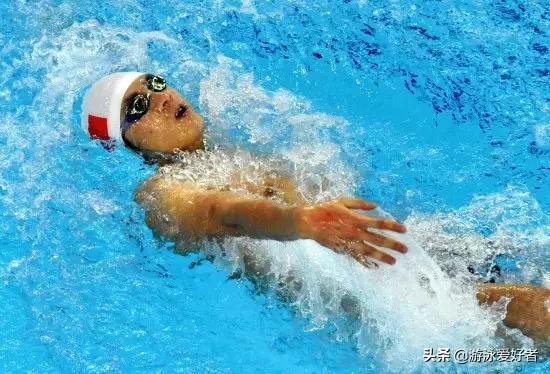
On the 4th of this month, Ming Xinyue, a student of Nanzhou Primary School in Qijiang District, won two gold medals in the 100-meter butterfly and 50-meter freestyle in the 2016 National Children’s Swimming Division Competition (Guangdong Division) organized by the Swimming Management Center of the State Sports General Administration.
The 11-year-old Ming Xinyue only started to learn swimming a year ago. As the youngest athlete in the sports history of Qijiang District, she has now reached the national second-class athlete standard and is also the captain of the school’s Young Pioneers. How did she manage to balance study and physical education?
In Class 6, Grade 6, Nanzhou Primary School, Qijiang District, Ming Xinyue is sitting in the last row with a pair of 300-degree glasses. When the bell of Chinese class rang, flowers exploded in the classroom immediately, and the students jumped up and ran to the corridor to play.
Ming Xinyue took out the homework that the Chinese teacher had just assigned and did it. While doing this, she told the Chongqing Evening News reporter: "With 10 minutes and noon time after each class, all the homework today can be completed. When you go home at night, you can review your lessons and read other extracurricular books. "
"When I was a child, my parents often took me to play in the Weihe River. I always liked the feeling of being free in the water." Ming Xinyue said. Last July, her parents sent her to a sports school to learn swimming.
After going to the swimming team, Ming Xinyue discovered that it was very different from playing with water when he was a child. "At most, I swam more than 8,000 meters in a training session. According to Fu Yuanhui’s words, I have tried my best and I am so tired. I have thought about giving up several times, and I have thought about giving up when I can’t finish my homework. " Ming Xinyue adjusted her glasses: "I got used to it after a long time."
At 4: 20 pm, the bell rang, and Ming Xinyue trotted out of the school with her schoolbag on her back. At 4: 40, Ming Xinyue and his mother Qing Yang arrived at the gate of Qijiang District Youth Sports School. At 5 o’clock, 15 players arrived, and Ming Xinyue and other players got on the bus under the guidance of coach Zhou Long.
Zhou Long said: "With the improvement of children’s swimming intensity, after the National Day this year, the sports school chartered a car to Wansheng for training every day."
At 5: 56, the bus arrived at Wansheng Cultural and Sports Center. The water temperature in the swimming pool is 29℃ and the indoor temperature is 30℃, but Ming Xinyue is still rubbing his limbs with cold. At 6: 10, at the command of Zhou Long, Ming Xinyue first jumped into the deep water area.
"Hurry up, Ming Xinyue, your grades have been turned over. If you don’t work hard, there will be no breakthrough." Zhou Long shouted at Mingxinyue in the swimming pool.
"There is no rest at all. After swimming round and round, every time they come, they are fighting for time." The swimming pool manager told the Chongqing Evening News reporter.
At 7 o’clock in the evening, after training, Ming Xinyue and other children got on the bus with wet hair. This time, she and her companions fell asleep in the car.
Chongqing Evening News reporter Hao Yao chief reporter Ran Wen correspondent Wu Rongkai photo report
Two noes in parental education
In Ming Xinyue’s home, mother Qing Yang took out a bag of awards, "Long-distance running, dancing, singing … … . Too many. We never spoil our children. When she was young, we didn’t hug her. We encouraged her to stand up by herself. "
"We won’t ask too much of her, and we will discuss everything with her, as long as she can do her best." Qing Yang said.
Gold medal girls also have troubles.
"I will also participate in the national championship in February next year. The next goal I set for myself is to win the national first-class athletes before I graduate from primary school." Ming Xinyue said.
After winning the prize, Xiao Xinyue’s life at school still changed: "Some students asked me for an autograph, saying that I would become a sports star in the future. I feel uncomfortable when they say this. I don’t feel different from others. The coach and parents control the diet very strictly. I haven’t eaten cake and sweet bread for a long time. " (Hao Yao, Yan Wen)